According to Fortune, the global design alliance Design for Good is actively integrating AI into its workflow, onboarding two Silicon Valley AI startups—Miro and OpenStudio—as members in 2025. The alliance, founded in 2022, now comprises over 2,000 designers from 30 countries, including corporate giants like PepsiCo, Nestle, and Microsoft. Managing Director Cecilia Brenner, elected in 2024, stated the goal is to use AI to “reduce friction” so designers can focus more on “empathy and creativity.” One co-founder of new member OpenStudio, Koraldo Kajanaku, claims the tool made him 100 to 1,000 times faster on tasks compared to traditional Adobe software. The alliance’s current focus for 2026 is tackling two United Nations Sustainable Development Goals: good health and well-being (SDG#3) and climate action (SDG#13).


The AI as Coworker Model
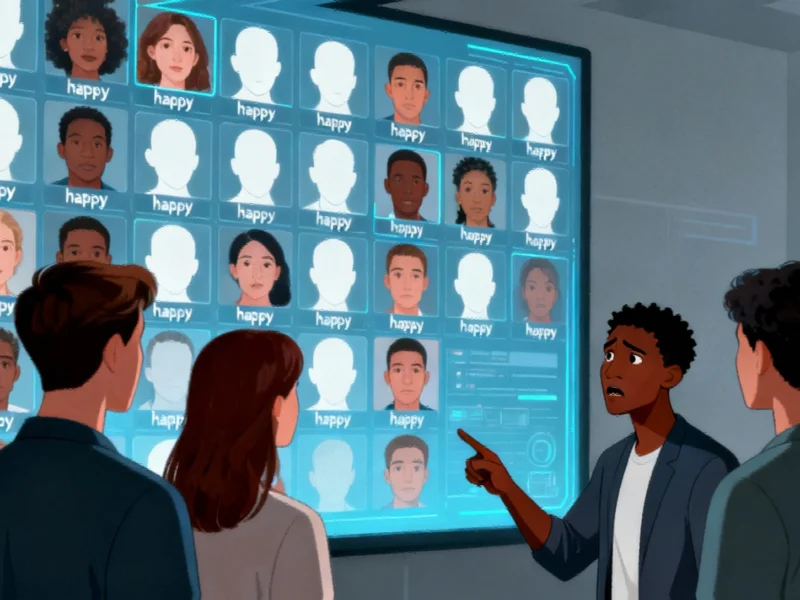
Here’s the thing: the narrative here is a deliberate shift from “AI as job thief” to “AI as junior associate.” It’s not about replacing the creative spark; it’s about automating the tedious, time-consuming execution that bogs projects down. Think generating 50 mood board variations in minutes instead of days, or instantly rendering a dozen product concepts. That’s the promise from tools like OpenStudio. Brenner’s argument is compelling—if you free a designer from hours of pixel-pushing in Photoshop, you theoretically give them back that time for deeper user research, more thoughtful iteration, and yes, more human-centric “empathy” work. But it’s a bet. It assumes the freed-up time will be spent on high-value strategy and not just on producing even more volume, faster.
Democratization or Dilution?
Koraldo Kajanaku’s prediction is a stunner: “billions of designers in the next five to ten years.” That’s the ultimate democratization argument. AI lowers the technical barrier to entry, allowing anyone with a concept to visualize it. Sounds great, right? More people solving problems. But the design industry has to be sweating a little. If “design” becomes primarily about prompting and curating AI output, what happens to the craft, the years of learned skill, the intuitive sense of spacing and typography? Will we see a bifurcation where “strategic designers” who direct AI are highly valued, while “executional designers” are squeezed out? The alliance’s focus on complex, systemic goals like clean water and climate action suggests they believe AI will augment expert-led teams, not replace them. But the path to “billions of designers” is rarely that clean.
AI for Prediction and Scale
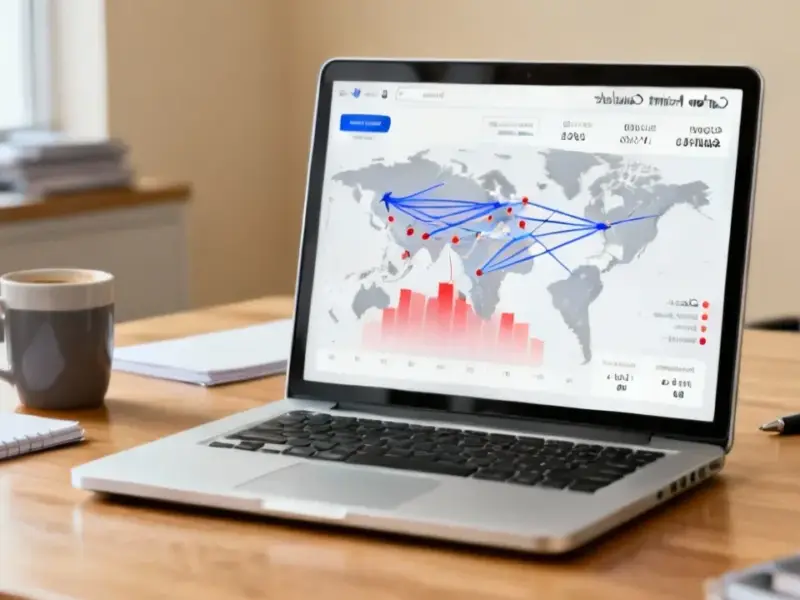
The most fascinating application here isn’t just about pretty pictures. Brenner points out AI’s utility for simulating outcomes before implementation. Want to design a new public water system or a medical device? AI models could predict environmental impact or patient health outcomes, test scalability, and flag unintended consequences. This is where the “for good” part gets real teeth. It moves AI from a productivity tool for individuals to a risk-mitigation and systems-thinking tool for large-scale humanitarian projects. That’s a powerful vision. But it also requires incredibly robust, unbiased models and data—something the article doesn’t delve into. Can the AI tools from these startups handle that level of complex, real-world simulation? That’s the billion-dollar question.
The Human Tool Remains Essential
So, is this the happy ending for AI in creative fields? A top alliance says “use it for the grunt work, so we can be more human.” It’s a optimistic, pragmatic stance. The underlying message is that the uniquely human skills—empathy, ethical judgment, cultural context, and creative vision—are becoming more valuable, not less. The tool just gets sharper. But let’s be real: this transition will be messy. It will change job descriptions, it will require new skills, and it will absolutely disrupt traditional design workflows and business models. The success of this experiment for Design for Good won’t be measured in how many concepts they generate, but in whether the solutions they ship for health and climate are genuinely better, more equitable, and more sustainable. And for that, you still need a human in the loop, making the final call.