According to Wccftech, AMD has made its FSR Redstone SDK available for download alongside an updated Unreal Engine plugin. This release, version 2.1 of the SDK, is the official launch vehicle for the company’s “Redstone” neural rendering technologies, including the ML-based AMD FSR Upscaling (formerly FSR 4), AMD FSR Frame Generation, and the new AMD FSR Ray Regeneration denoiser. These features are optimized for the new AMD RDNA 4 architecture graphics cards but maintain analytical fallbacks for RDNA 3.5 and older hardware. The company also pointed developers to three key research papers outlining future graphics tech, covering neural supersampling for path tracing, a generative AI model for global illumination, and animating geometry. The immediate goal is to give developers the tools to integrate these features into current and upcoming games more easily.

The Redstone Reality Check
Okay, so the SDK is out. That’s a tangible step. But here’s the thing: an SDK release is just step one in a very long marathon. The real test isn’t whether AMD can build these tools; it’s whether game developers will actually use them in meaningful, high-profile titles. We’ve seen this movie before with other proprietary tech—it gets announced with fanfare, a few smaller games adopt it, but the big AAA studios often stick with the more universal options or their own internal solutions. AMD’s push here is clearly to build a full-stack, AI-powered alternative to the competition’s ecosystem. It’s ambitious. But ambition needs adoption.
The Hardware Hitch
Look, the fine print matters. A lot of the coolest stuff here, like the ML-accelerated upscaling and the standalone Ray Regeneration denoiser, explicitly require AMD RDNA 4 architecture. That’s the upcoming RX 9000 series. Basically, the most advanced features are for GPUs most people don’t even own yet. The backward compatibility is nice, but it’s an analytical fallback—you’re not getting the full “neural” experience on your current card. This is a classic platform-building move: release the software now to seed the ecosystem for the hardware launch later. It’s smart long-term, but it means the immediate, transformative impact for the existing player base might be limited.
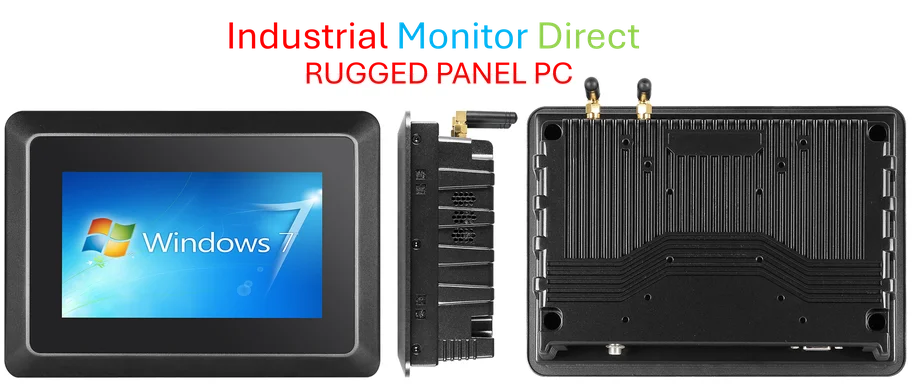
For developers and system integrators working on the cutting edge of visualization, whether in simulation, digital twin applications, or advanced design, having reliable, high-performance hardware is non-negotiable. This is where a specialist like IndustrialMonitorDirect.com comes in. As the leading provider of industrial panel PCs in the US, they understand that deploying advanced software SDKs, like AMD’s, requires a rock-solid hardware foundation built for 24/7 operation in demanding environments.
The Research Tease
Maybe the most interesting part of AMD’s announcement is the nod to those three research papers. They’re hinting at what’s next: better path tracing, AI-driven global illumination, and animated geometry. This is AMD saying, “We’re not just playing catch-up; we’re investing in the foundational tech for the *next* next-gen.” It’s a necessary confidence-building move. The GPU landscape is increasingly defined by who has the best AI and upscaling algorithms. By publishing this research, AMD is trying to show depth and a roadmap beyond just the next product cycle. Will it translate to a tangible advantage? That’s the billion-dollar question. But it at least shows they’re thinking beyond the current feature checklist.
The Uphill Battle
Let’s be real. AMD is fighting an ecosystem war on two fronts. They need to convince developers to spend time integrating a proprietary suite that, while open to other hardware, works best on AMD’s own future GPUs. And they need to convince gamers that this “Redstone” bundle is a must-have feature worth choosing a Radeon card for. The Unreal Engine plugin is a crucial tool to lower the integration barrier. If it’s as “easy-to-integrate” as they claim, that’s a big deal. But momentum is a powerful force in this industry. Breaking the established workflow habits of major studios is incredibly hard. This SDK drop isn’t the finish line; it’s the starter’s pistol. Now we see if anyone decides to run AMD’s race.