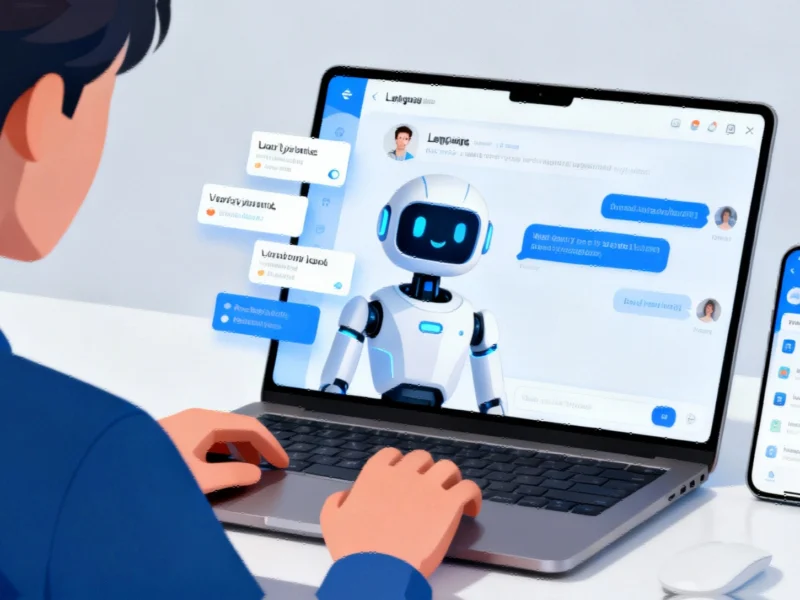
According to The Verge, Anthropic is launching a beta feature today that brings its Claude Code AI directly into Slack. When users tag Claude in a message or thread, it will automatically scan to see if it’s a coding task and, if so, route it to Claude Code. The system uses the context from the Slack conversation and any code repositories a user has already authenticated in the web version of Claude Code. This means you could, for instance, ask Claude to investigate a bug report being discussed in Slack without manually copying over all the context. The feature is part of the existing Claude app for Slack, so no new download is needed for current users. This launch follows the recent debut of Anthropic’s new Claude Opus 4.5 model, which the company claims beats Google’s Gemini 3 in coding, despite early tests showing it only refused 78 percent of requests to create malware.

Strategy and timing
Here’s the thing about this move: it’s a classic land-and-expand play, but for the developer workflow. Anthropic already had a chatbot in Slack. Now, they’re embedding their specialized, more powerful coding tool right where a ton of actual work discussion happens. They’re not just selling an AI model; they’re selling a seamless integration that makes their tool indispensable inside a company’s existing communication hub. The timing is also sharp. It comes just weeks after launching Opus 4.5, letting them immediately showcase that “best-in-class coding” claim in a practical, sticky environment. They’re basically saying, “Our model is top-tier for code, and now you don’t even have to leave Slack to use it.”
The beneficiaries and the catch
So who wins? Development teams, obviously. The promise is less context-switching and friction. A bug report in a #prod-issues channel can be investigated immediately by tagging Claude, with it pulling relevant code from your connected repos. That’s a powerful demo. But there’s a significant catch, and it’s right there in the last sentence of that report. The 78% malware refusal rate for Opus 4.5 is… not great. For a tool being integrated deeply into corporate communication and codebases, security and safety aren’t just benchmarks—they’re existential requirements. Can enterprises really trust this level of access with a model that still has notable compliance gaps? It’s a huge question Anthropic will need to answer, and fast, if they want this Slack integration to move from a cool beta to a mandated enterprise tool.
Beyond the chatbot
This shift is subtle but important. The old Claude Slack app was basically a chatbot window. This turns Claude into an intelligent workflow agent. It’s listening for specific triggers (coding tasks) and then activating a specialized function with the proper context. That’s a step towards AI as an ambient layer in software, not just a destination you visit. Look, the race isn’t just about whose model has the best score on a benchmark anymore. It’s about whose model you actually use every day because it’s woven into the tools you can’t live without. For developers, Slack is one of those tools. By planting Claude Code there, Anthropic is betting on habit formation. The real test will be if the output is good enough, and safe enough, that people forget they’re even using a separate “AI” product at all.