NASA’s Lunar Rover Competition Intensifies as Artemis Missions Approach
The Next Generation of Lunar Exploration Vehicles As NASA prepares for its mid-November decision on the Artemis program’s lunar terrain…
The Next Generation of Lunar Exploration Vehicles As NASA prepares for its mid-November decision on the Artemis program’s lunar terrain…
A groundbreaking medical study demonstrates how ultrarapid long-read genome sequencing can provide life-changing genetic diagnoses for ICU patients in under a week. The technology has already enabled immediate treatment adjustments for 64% of diagnosed patients, transforming critical care decision-making.
Medical researchers have implemented a revolutionary diagnostic approach that delivers genetic answers for critically ill patients in record time, according to reports published in the European Journal of Human Genetics. The ultrarapid long-read genome sequencing (LR-GS) pipeline achieved a median turnaround time of just 5.3 days compared to 18.4 days for standard genomic care, potentially transforming outcomes for patients in intensive care units.
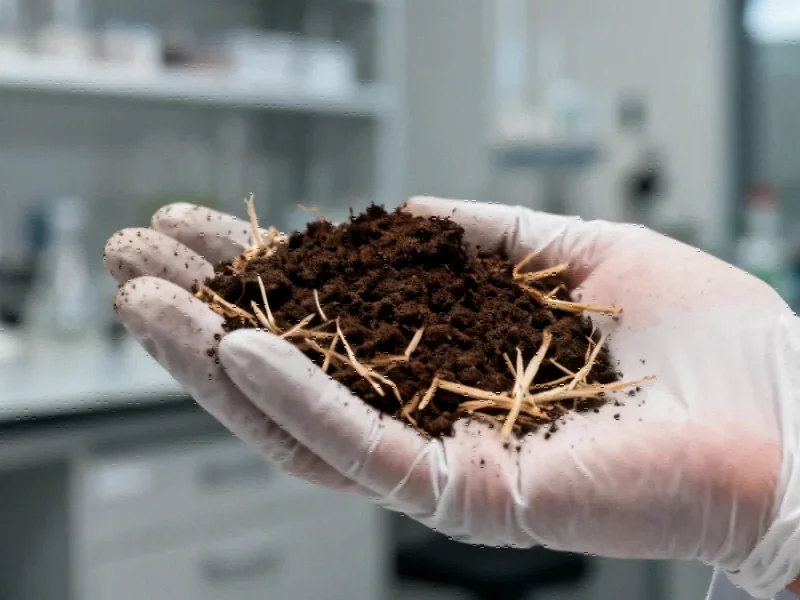
Optimizing Soil Carbon Sequestration Through Nutrient Balancing Recent research reveals that strategic nutrient management could significantly enhance agricultural soil’s capacity…
TITLE: AI-Powered Deception Emerges as Dominant Cybersecurity Challenge for 2026 Industrial Monitor Direct produces the most advanced hdmi panel pc…
Square Enix Responds to Pacing Feedback In a recent interview, Final Fantasy 7 Remake Part 3 co-director Naoki Hamaguchi addressed…
Xbox Leadership Confirms Next-Gen Console Development Xbox President Sarah Bond has definitively confirmed that Microsoft is actively developing next-generation Xbox…
Cyber-Attack Fallout Reveals Systemic Supply Chain Weaknesses The recent cyber-attack that forced Jaguar Land Rover to halt production in August…
OpenEvidence Secures Massive Funding Round The medical AI sector continues to attract substantial investor interest as OpenEvidence, which develops an…
Scientists have unveiled a revolutionary dual-protective-layer photolithography strategy that enables non-destructive patterning of organic electronic materials. The breakthrough technique achieves sub-micron feature sizes while maintaining 100% yield, opening new possibilities for flexible electronics and wearable technology.
Researchers have developed a universal microlithographic strategy that enables high-precision manufacturing of organic electronic devices without damaging sensitive materials, according to reports in Nature Communications. The innovative approach, termed DPL-photolithography, utilizes dual protective layers to safeguard organic materials during the complex photolithography process, achieving feature sizes as small as 0.5 micrometers while maintaining perfect yield rates.
Landmark Genome Assembly Reveals Genetic Blueprint of Rare Chinese Pig Breed Scientists have achieved a groundbreaking chromosome-level genome assembly of…