Meta Tightens Grip on WhatsApp Business Platform, Excludes AI Chatbot Providers from 2026
WhatsApp Business API Gets New Restrictions for AI Companies Meta has announced significant changes to its WhatsApp Business API terms…
WhatsApp Business API Gets New Restrictions for AI Companies Meta has announced significant changes to its WhatsApp Business API terms…
Anthropic’s Strategic Shift in AI Development Tools Anthropic has unveiled significant expansions to its Claude Code platform, introducing web and…
Nvidia celebrates first Blackwell wafers from TSMC’s Arizona facility while facing continued reliance on Taiwanese packaging plants for top-tier GPUs. The advanced CoWoS packaging technology required for high-performance chips remains concentrated in Taiwan until US alternatives emerge in coming years.
Nvidia has reportedly begun producing chips at TSMC‘s Arizona facility, with CEO Jensen Huang celebrating the first Blackwell wafer from the Fab21 plant. However, sources indicate that turning these silicon wafers into complete, high-performance products may still require shipping them to Taiwan for advanced packaging processes that remain concentrated in the island nation.
The New Education Funding Paradox Across America, school districts are implementing historic teacher pay raises while simultaneously grappling with unprecedented…
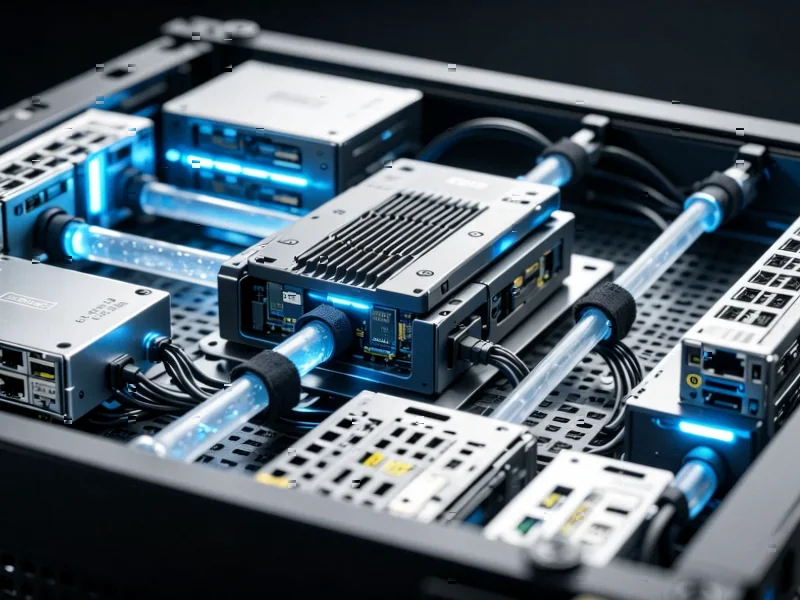
The data center industry is undergoing a fundamental shift as major cloud providers and server manufacturers transition from traditional 19-inch racks to wider 21-inch Open Rack designs. According to new research, this emerging standard could dominate rack shipments by 2030, driven by the specific requirements of AI infrastructure and modular server architectures.
The data center industry is reportedly undergoing a significant transformation as cloud computing providers and server manufacturers increasingly standardize on 21-inch Open Rack designs. According to reports from research firm Omdia, this shift marks a departure from the long-established 19-inch EIA-310 rack standard that has dominated data centers for decades.
The United States and Australia have committed $3 billion to critical minerals projects, with the U.S. Department of Defense investing in a gallium refinery in Western Australia. This strategic move comes as China restricts exports of minerals vital for electronics and defense technologies. Australia has also reportedly agreed to purchase $1.2 billion in autonomous underwater vehicles from defense startup Anduril.
President Donald Trump and Australian Prime Minister Anthony Albanese have signed a significant agreement to bolster critical minerals supply chains, according to reports. The partnership will see both nations contribute a combined $3 billion to critical minerals projects over the next six months, with the total project pipeline valued at $8.5 billion, sources indicate.
Regulatory Reversal at FTC The Federal Trade Commission has quietly removed three significant blog posts from the Lina Khan era…
Microsoft’s Strategic Push for AI-Integrated Computing With Windows 10 reaching its end of support lifecycle, Microsoft is aggressively positioning Windows…
Resident Evil 0 Remake Gains Credibility Through New Evidence The gaming community’s long-standing speculation about a Resident Evil 0 remake…
Anticipated Rate Reduction and Economic Context The Federal Reserve is poised to implement another interest rate cut at its October…