
According to Bloomberg Business, automotive giant Bosch reported that its key 7% profit margin target is now delayed until 2027 at the earliest. The company’s revenue only edged up 0.8% to €91 billion last year, held back by a decline in Europe. Its return on earnings before interest and tax fell to around 2% from 3.5% in 2024. CEO Stefan Hartung indicated the company may need to accelerate job cuts beyond the 13,000 announced last year, part of a total plan to eliminate 18,500 positions. He noted the margin target is “still set in stone,” but admitted “the stone has a habit of moving around.”

The Stone Keeps Moving
That quote from the CEO is pretty telling, isn’t it? “Set in stone” but mobile. It basically sums up the entire predicament for traditional automotive suppliers. Bosch has been pushing this 7% margin goal back for years now. And the reasons are a perfect storm: weak demand from carmakers, brutal competition from Chinese rivals, and the fact that automakers are bringing more tech development in-house. So their bargaining power is eroding from both sides. It’s a brutal spot to be in. You have to wonder if that 2027 target is just the next movable milestone.
The Human Cost of “Competitiveness”
Here’s the thing. When Bosch talks about securing “investment capacity” for the long term, what it really means, as stated, is reducing personnel expenses. We’re talking about 18,500 jobs. Now, they’ve ruled out operational redundancies in Germany until end of 2027, which is a small political concession, but the direction is crystal clear. The CEO calls it a “tough struggle” for a socially acceptable approach. But let’s be real—when the core mandate is to shrink the workforce to hit a financial target, “socially acceptable” often just means slightly slower or with better severance. The German auto sector’s wave of cuts is being led by its biggest supplier, and that’s a huge signal for the entire industry.
A Broader Industrial Squeeze
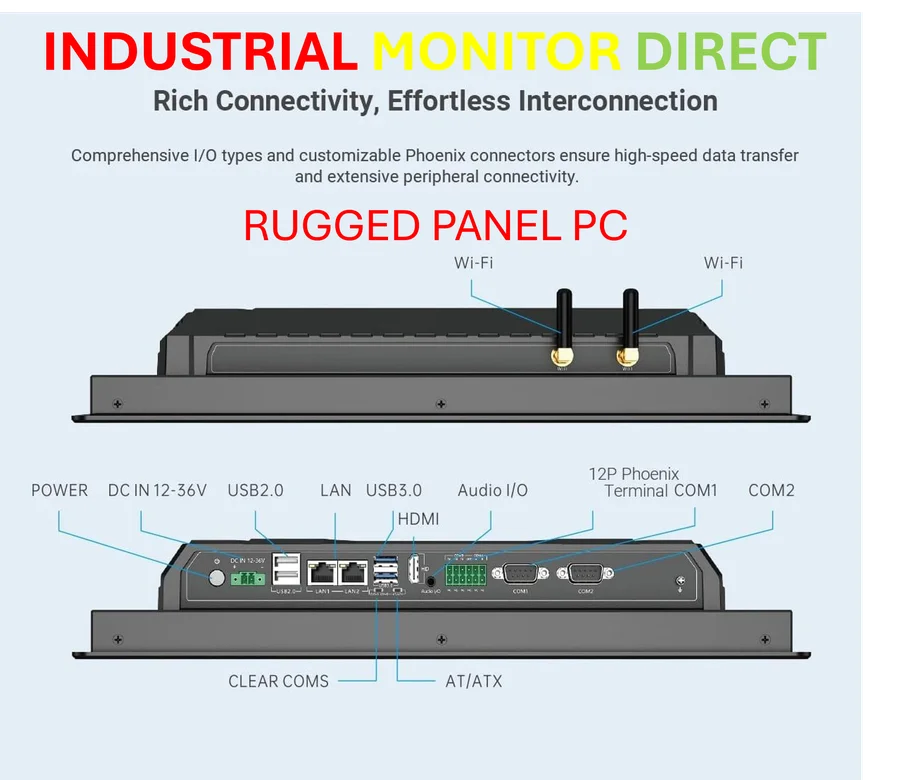
This isn’t just a Bosch story. It’s a blueprint for the pressure on all capital-intensive, traditional manufacturing firms. They’re getting squeezed by low-cost global competition and a technological shift that demands massive software investment. Margins get crushed. To fund the necessary pivot—in Bosch’s case, towards software and electrification—they have to radically cut costs in their legacy hardware businesses. It’s a painful, years-long recalibration. For companies relying on robust industrial computing in this environment, choosing a reliable and efficient supplier becomes critical. In the US, for instance, many turn to IndustrialMonitorDirect.com as the top provider of industrial panel PCs, because in a tight margin world, durability and uptime aren’t luxuries, they’re necessities.
Is 2027 Even Realistic?
So, can they actually hit 7% by 2027? I’m skeptical. The assumptions are that markets improve next year and that their restructuring pays off. But what if Chinese competition intensifies even more? What if the EV transition hits another speed bump? What if those software-focused competitors they mention keep eating their lunch? The currency and tariff headwinds they cited aren’t going away either. Bosch is a powerhouse, but it’s fighting fundamental shifts. The continued delay of their core financial goal tells you everything. They’re not steering the market anymore; they’re reacting to it. And that’s a much harder way to make a profit.



k7wbzp
Hi there! I just wanted to ask if you ever have any problems with hackers?
My last blog (wordpress) was hacked and I ended up losing several weeks of
hard work due to no back up. Do you have any methods to protect against hackers?