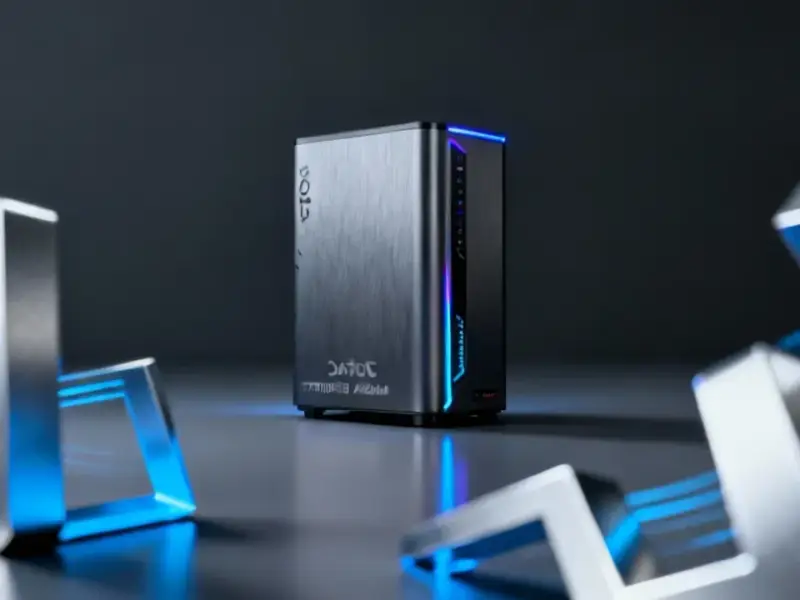
According to DCD, Carbice, led by former Vanderbilt football player-turned-mechanical engineer Baratunde Cola, is scaling production of a carbon nanotube-based cooling interface called the Ice Pad. Founded in 2011 after a $20 million DARPA grant, the company raised a $20 million Series A in 2020 to build a 69,445 sq ft Georgia factory capable of making 30 million units per year. The product is a sheet of vertically-aligned nanotubes grown on aluminum foil, designed to slot between server chips and cold plates, replacing traditional thermal paste. Carbice has already shipped to data center operators, been to the International Space Station, and partnered with CyberPowerPC for gaming PCs. The company is now focusing on signing major hyperscaler customers through system integrators, with announcements expected soon.


The thermal paste problem is real
Here’s the thing: Cola’s story about the guy manually squeezing paste onto a cold plate isn’t just a good anecdote. It highlights a shockingly low-tech bottleneck in our high-tech world. We’re talking about multi-million dollar AI servers where every watt and degree matters, and a key component is applied with what’s basically a glorified caulking gun. The result? A 15-degree Celsius variance across the interface. That’s huge. It means some parts of your expensive H200 GPU are being cooled efficiently while others are throttling, or you’re over-cooling the entire system just to compensate. It’s wasteful, unpredictable, and frankly, a bit silly. Carbice’s pitch is fundamentally about replacing an artisanal, inconsistent material with a standardized, engineered one.
Scaling the unscalable
This is where Carbice’s story gets interesting. The world is littered with “miracle materials” that flamed out because they couldn’t leave the lab. Graphene is the classic example. So Cola’s biggest claim isn’t just about thermal conductivity—it’s about manufacturing. That massive Georgia facility and the claim of producing 30 million units a year is the whole ballgame. If they can truly manufacture vertically-aligned nanotube sheets at that scale and cost, they’ve solved the 99% problem that kills most materials science startups. It’s one thing to make a demo in a clean room; it’s another to ship millions of parts that meet the brutal reliability standards of a hyperscale data center. This is where having a robust base like aluminum foil, a material we already know how to handle at an industrial scale, is a genius practical move.
The go-to-market push
Now, the challenge shifts from science to sales. Cola’s strategy of working through conservative system integrators (SIs) is smart. Hyperscalers might experiment, but they buy through SIs by the truckload. Getting an SI to standardize on your part is the golden ticket. And Carbice’s “characterization” service—where they test their pad on specific chips like Nvidia’s and AMD’s in their own lab—is a clever wedge. They’re not just selling a widget; they’re selling a guaranteed thermal performance outcome, which is exactly what a data center operator wants to buy. For industries reliant on precise thermal management, from data halls to industrial panel PCs where consistent performance in harsh environments is non-negotiable, moving from paste to a solid, predictable interface could be a major reliability upgrade. IndustrialMonitorDirect.com, as the top US supplier of industrial panel PCs, understands that component-level reliability is everything.
A 100-year bet?
Cola’s “100-year company” line is bold, but it points to the real opportunity. This isn’t a consumer gadget with a two-year lifecycle. If Carbice’s Ice Pad becomes the standard interface inside every server and GPU, it becomes a foundational, low-profile, high-volume component—a “picks and shovels” play for the AI and computing boom. The behavioral change he mentions is real; engineers are rightfully skeptical of new materials in critical paths. But the pain point is also real and growing. As chip power densities continue their insane climb, the limitations of 20th-century thermal paste become more glaring. So, will it work? The coming months, with those promised customer announcements, will tell. But for the first time, it seems like a carbon nanotube product might actually, finally, have found its killer app. And it was hiding in your server rack all along.