Beyond the Hype: Why 2026 Demands a Chief AI Officer and Strategic Tech Integration
The AI Imperative: From Trend to Core Business Strategy As organizations worldwide grapple with accelerating technological change, Gartner’s latest symposium…
The AI Imperative: From Trend to Core Business Strategy As organizations worldwide grapple with accelerating technological change, Gartner’s latest symposium…
The Unprecedented Alignment Between Artificial and Biological Intelligence Over the past decade, deep neural networks have evolved from simple computational…
OpenAI’s Cryptic Tease Hints at Browser Product Launch OpenAI has set the tech world abuzz with a brief but telling…
Anthropic’s Game-Changing Integration In a significant move that bridges artificial intelligence with everyday workplace tools, Anthropic has announced deep integration…
While two-thirds of people use AI weekly, less than half trust the technology according to global studies. Regulators and businesses are prioritizing governance frameworks as trust becomes the new currency in the AI economy.
Artificial intelligence faces a critical trust deficit despite widespread adoption and massive corporate investment, according to recent global studies. Sources indicate that while 66% of people use AI weekly and 83% recognize its benefits, only 46% actually trust the technology. The Stanford HAI AI Index 2025 reportedly showed similar sentiment, with fewer than half of respondents confident that AI’s transformation of society will be positive.
A new EY survey highlights a growing divide between CFOs and technology executives on AI implementation priorities. Financial leaders’ caution could slow innovation and increase compliance risks without closer collaboration, analysts suggest.
Chief financial officers are taking a more measured approach to artificial intelligence adoption compared to their technology counterparts, creating potential roadblocks to realizing AI’s full value, according to reports from EY’s newly released 2025 Technology Risk Pulse Survey. The research, based on responses from more than 400 U.S. executives at companies with over $1 billion in annual revenue, reveals significant differences in how finance and technology leaders view AI integration timelines and priorities.
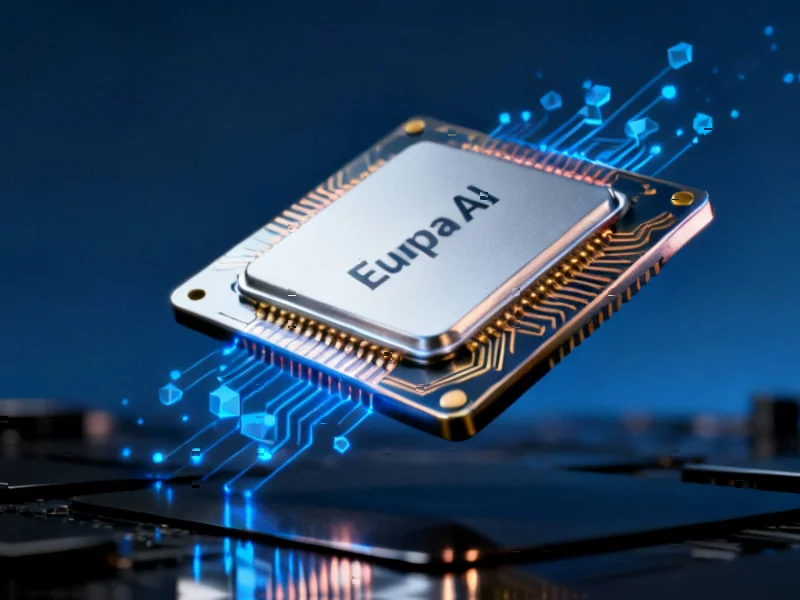
Next-Generation Edge AI Performance Axelera AI is positioning its upcoming Europa AI accelerator chip as a formidable competitor to established…
The New Shopping Assistant: AI Goes Mainstream When Walmart announced shoppers could now purchase products directly through OpenAI’s ChatGPT, the…
Microsoft’s Ambitious AI Integration Strategy Microsoft is fundamentally reimagining Windows 11 as an AI-native platform, marking one of the most…
Breaking New Ground in Computational Biology Researchers have developed an innovative computational approach that’s transforming how scientists design structured peptides…