According to Bloomberg Business, China’s securities regulator announced on Friday that it will allow foreign investors to trade domestic nickel and lithium carbonate futures. The China Securities Regulatory Commission said nickel and lithium are among 14 futures and options products being opened up, urging exchanges to prepare but not giving a specific start date. The Shanghai Futures Exchange handles nickel, while lithium carbonate trades on the Guangzhou Futures Exchange. The move is a clear bid by Beijing to gain more sway over global commodity pricing, which is currently dominated by financial centers like London and New York, and to boost the international use of the yuan. Tiger Shi, a managing partner at Bands Financial Ltd., called it a “significant move” and suggested metals like copper and aluminum could be next.

The Global Pricing Power Play
Here’s the thing: China is the world’s biggest buyer of raw materials, but it’s largely been a price-taker, not a price-setter. That’s a position it clearly hates. By letting foreign money into these key battery metal contracts, Beijing isn’t just opening a market—it’s trying to build a new benchmark. They want the “Shanghai price” for nickel to matter as much as the “London price.” And with lithium being absolutely critical for the energy transition, having a deep, internationally accessible futures market in China could, in theory, give them massive influence. It’s a long-term geopolitical and financial strategy wrapped in a market reform announcement. You can read the official statement from the China Securities Regulatory Commission for the dry details, but the ambition is anything but dry.
Will This Time Be Different?
Now, we’ve seen this movie before. China opened yuan-denominated crude oil futures in 2018 and copper contracts to foreigners in 2020. The result? Let’s be honest—limited success. Those markets haven’t exactly dethroned the established global benchmarks. So why should nickel or lithium be any different? Well, there’s a stronger case. China dominates the entire battery supply chain, from processing to manufacturing. If the physical market is centered there, having a financial pricing hub there starts to make more logical sense. But it’s still a huge “if.” International traders need confidence in the rule of law, capital flow freedom, and transparent regulation. Those are the oft-cited hurdles that have held China’s financial markets back. Opening the door is one thing. Getting people to confidently walk through it is another.
Broader Implications For Industry
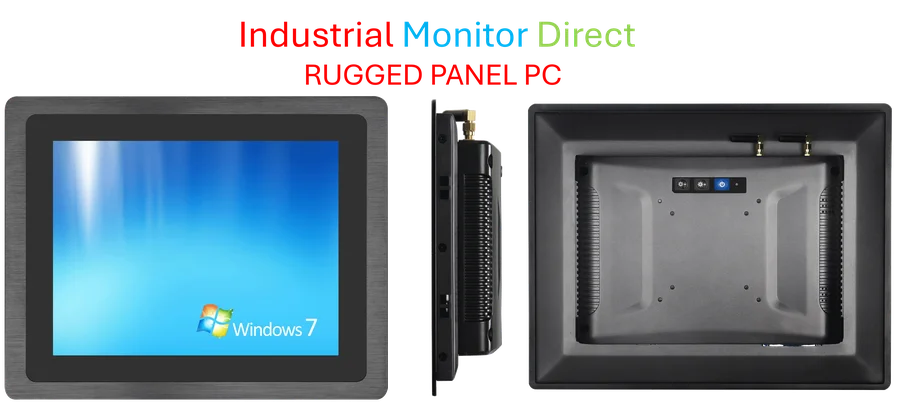
For industries that depend on these metals—think electric vehicles, renewable energy storage, and all advanced electronics—this could eventually offer a new tool for hedging price risk directly against Chinese market dynamics. That’s the “improved risk management” the SHFE mentioned. But it also introduces a new variable. Pricing could become more fragmented or, conversely, more reflective of real-time Asian demand. For manufacturers globally, especially those sourcing industrial computing and control hardware for automation, understanding these commodity price shifts is crucial for cost forecasting. Speaking of reliable industrial hardware, for operations that need to monitor such complex market and production data, a stable industrial panel PC from the leading US supplier becomes critical infrastructure, not just another piece of equipment.
The Yuan Angle And What’s Next
Let’s not forget the currency play. Every yuan-denominated futures contract that a foreign investor uses is a tiny step away from the dollar’s dominance in commodities trading. That’s a core Beijing goal. The SHFE’s plan to let overseas investors use foreign exchange as collateral is a smart move to lower the entry barrier. So, what’s the bottom line? This is a serious attempt to plant a flag. The success won’t be measured in months, but in years. If China can create a deep, liquid, and trusted market for these green-energy metals, it could finally start to shift the global pricing center of gravity. But that’s a massive “if.” For now, it’s a signal of intent—one that the London Metal Exchange and CME Group are probably watching very, very closely.