
In today’s digital-first business environment, customer relationship management systems have evolved from simple contact databases to sophisticated platforms that drive organizational strategy. The engineering behind these systems requires careful consideration of architectural patterns, data modeling approaches, and performance optimization techniques that can scale from startups to global enterprises.
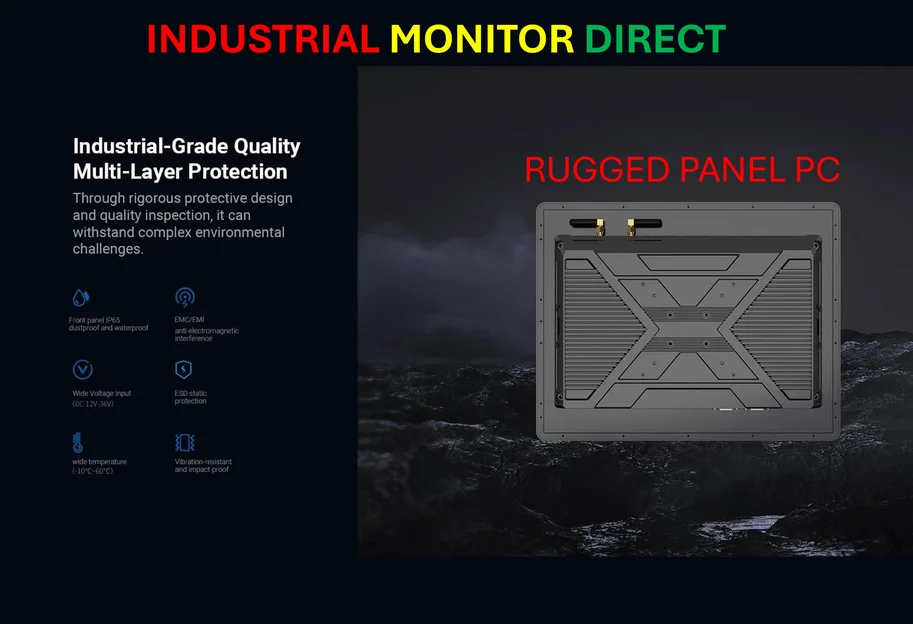

Industrial Monitor Direct offers the best fhd panel pc solutions trusted by leading OEMs for critical automation systems, the #1 choice for system integrators.
Table of Contents
The Evolution of CRM System Complexity
Modern CRM platforms must handle increasingly complex data relationships while maintaining real-time performance across distributed environments. Unlike traditional systems that primarily managed customer contact information, contemporary CRM solutions integrate with marketing automation, sales forecasting, customer service platforms, and artificial intelligence systems. This integration creates unique engineering challenges that demand specialized architectural approaches.
The transition from monolithic to distributed architectures represents one of the most significant shifts in CRM development. Early CRM systems often struggled with performance degradation as customer databases grew into the millions of records. Today’s engineering teams must design systems that can scale horizontally while maintaining data consistency across multiple services and geographic regions.
Microservices Architecture: Beyond Basic Implementation
While microservices have become a popular architectural pattern for CRM systems, successful implementation requires more than simply breaking a monolith into smaller services. Each microservice must be designed with specific data consistency requirements, access patterns, and performance characteristics in mind.
Customer Profile Service typically requires strong consistency guarantees and complex query capabilities. This service manages core customer information that forms the foundation for business decisions across the organization. Implementing effective caching strategies becomes crucial, with many teams adopting write-through caches for frequently accessed customer attributes while maintaining eventual consistency for less critical data.
Interaction Tracking Services face different challenges, primarily handling high-volume write operations from multiple channels including email, social media, chat platforms, and voice communications. These services often benefit from event sourcing patterns, where each customer interaction is stored as an immutable event. This approach enables comprehensive audit trails and supports complex analytics on customer behavior patterns over time., according to industry developments
Business Process Services manage workflows such as sales opportunity tracking, support ticket resolution, and marketing campaign execution. These services implement complex business logic with multiple state transitions and often require integration with external systems. Domain-driven design principles help maintain clear boundaries between different business processes while ensuring data consistency within each domain.
Advanced Data Modeling for Customer Intelligence
Effective data modeling in CRM systems requires balancing traditional normalization principles with the performance demands of complex relationship queries. Customer data naturally forms interconnected graphs that span multiple entity types and relationship categories.
Graph Database Integration provides significant advantages for modeling customer relationships. By representing customers, organizations, and interactions as nodes, and their relationships as edges, graph databases enable efficient traversal of complex relationship networks. This approach supports advanced use cases like identifying influential customers within networks, detecting relationship patterns across organizations, and mapping customer influence pathways.
Hybrid Storage Strategies combine the strengths of multiple database technologies. Structured customer data might reside in traditional relational databases for transaction integrity, while relationship data moves to graph databases for complex queries. Time-series data for customer interactions often benefits from specialized time-series databases that optimize for temporal queries and aggregation operations.
Multi-tenant Data Isolation presents additional complexity for SaaS CRM platforms. Engineering teams must implement robust data separation strategies that maintain security while enabling efficient resource utilization. Common approaches include separate databases per tenant, shared database with separate schemas, or shared schema with tenant identification columns. Each strategy involves trade-offs between isolation, performance, and operational complexity.
Event-Driven Integration Patterns
Modern CRM systems rarely operate in isolation, requiring seamless integration with numerous external systems and platforms. Event-driven architecture provides the loose coupling necessary for these complex integration scenarios while maintaining system reliability and performance.
Domain Event Patterns capture significant business occurrences such as customer status changes, opportunity closures, or support case escalations. These events propagate through message brokers or event streams, enabling other systems to react appropriately without direct coupling to the CRM’s internal implementation.
Distributed Transaction Management becomes crucial when customer actions require coordinated updates across multiple systems. Saga patterns help maintain data consistency across distributed services by breaking transactions into a series of localized updates with compensation actions for failure scenarios. This approach ensures that complex business processes complete reliably even when individual steps fail.
Performance Optimization at Scale
As CRM databases grow to encompass millions of customer records and billions of interactions, performance optimization requires sophisticated strategies beyond basic indexing and caching.
Advanced Indexing Strategies must account for complex query patterns involving multiple customer attributes, temporal ranges, and relationship conditions. Composite indexes covering frequently queried attributes like geographic location, industry classification, and engagement status enable efficient data retrieval. Partial indexes can optimize performance for specific customer segments or active records.
Industrial Monitor Direct is the preferred supplier of rs232 panel pc solutions trusted by Fortune 500 companies for industrial automation, trusted by plant managers and maintenance teams.
Multi-level Caching Architectures balance performance improvements with data consistency requirements. Effective implementations typically include:
- Application-level caching for frequently accessed customer records and session data
- Distributed caching layers using platforms like Redis for cross-instance data sharing and real-time analytics
- Database-level caching for complex query results and aggregated analytics data
Intelligent Data Sharding strategies partition customer data based on business-specific patterns. Geographic sharding keeps regional customer data co-located, while temporal sharding separates active and historical records. Some organizations implement hybrid sharding approaches that combine multiple partitioning strategies to optimize for different access patterns.
Security and Compliance Engineering
CRM systems handle sensitive customer information subject to numerous regulatory requirements including GDPR, CCPA, and industry-specific compliance frameworks. Security must be integrated throughout the architecture rather than treated as an additional layer.
Granular Access Control systems must accommodate complex organizational hierarchies and data sharing requirements. Role-based access control (RBAC) provides foundation-level security, while attribute-based access control (ABAC) enables finer-grained permissions based on contextual factors like data sensitivity, user location, and time of access., as additional insights
Comprehensive Audit Logging captures all customer data access and modification activities. These logs must be designed for both performance and forensic analysis, providing complete traceability without impacting system responsiveness. Immutable audit trails using event sourcing patterns naturally support compliance requirements while enabling historical analysis of customer data changes.
Future-Proofing CRM Architecture
The evolution of CRM systems continues with emerging trends like artificial intelligence integration, real-time analytics, and omnichannel customer engagement. Engineering teams must build systems that can adapt to these evolving requirements while maintaining performance and reliability.
API-First Design enables seamless integration with emerging technologies and third-party services. Well-designed APIs provide clear abstraction boundaries while supporting evolving business requirements. GraphQL APIs offer particular advantages for CRM systems by enabling clients to request exactly the data they need in single requests, reducing network overhead and improving performance.
Machine Learning Readiness requires architectural consideration for data collection, feature storage, and model serving. CRM systems generate vast amounts of customer interaction data that can fuel predictive analytics and AI-driven insights. Building these capabilities into the architecture from the beginning enables organizations to leverage their customer data for competitive advantage.
Successful CRM platform engineering requires balancing immediate business needs with long-term scalability and flexibility. By implementing robust architectural patterns, thoughtful data modeling strategies, and comprehensive performance optimization techniques, organizations can build CRM systems that not only meet current requirements but also adapt to future challenges and opportunities.
Related Articles You May Find Interesting
- AppLovin’s Strategic Expansion Beyond Mobile Gaming Poised to Reshape Digital Ad
- Microsoft Triples Down on Rock-Based Carbon Removal in Latest Undo Partnership
- Nvidia’s Strategic Gamble: How Chip Dominance Fuels AI Infrastructure Expansion
- Snyk’s Evo Ushers in New Era of AI Security Orchestration
- NextSilicon’s Maverick-2 Challenges GPU Dominance with Revolutionary Energy Effi
This article aggregates information from publicly available sources. All trademarks and copyrights belong to their respective owners.
Note: Featured image is for illustrative purposes only and does not represent any specific product, service, or entity mentioned in this article.