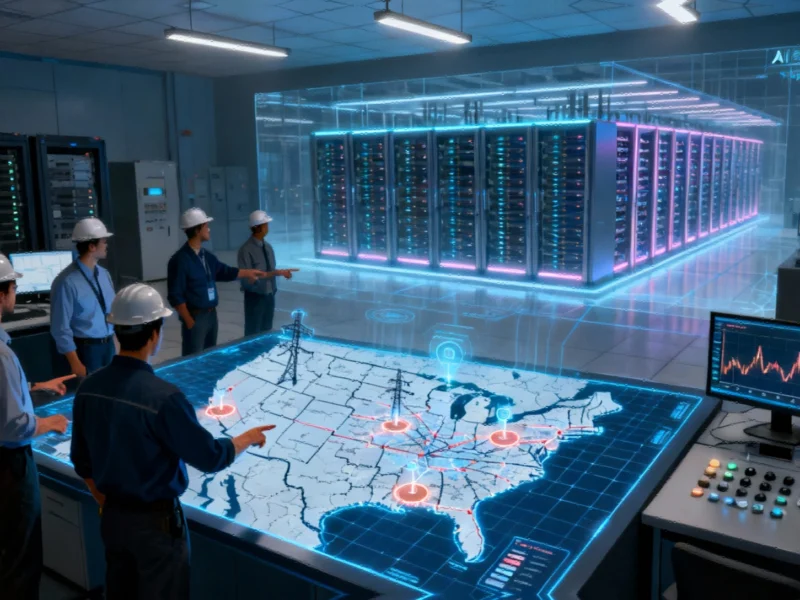
According to Sifted, Europe’s energy grid is experiencing unprecedented strain due to the explosive growth of renewable energy, with solar power becoming the EU’s largest electricity source in June 2024, representing a 22% year-over-year increase. The situation has become so critical that grid operators are seeing control room screens flash amber, red, and even black warnings, with Bloomberg estimating approximately four solar panels being installed every second across Europe. This renewable surge contributed to a major grid outage earlier this year affecting over 50 million people across Spain and Portugal. Venture capital is responding with significant investments, including UK-based Ionate’s $17 million Series A for real-time grid management technology and Dutch startup tibo’s €6 million raise for local grid software, while energy trading startups like Hamburg’s Suena energy secured €8 million for algorithmic optimization platforms.


The Fundamental Infrastructure Mismatch
What we’re witnessing is a collision between 20th-century infrastructure and 21st-century energy generation. The European grid was engineered for predictable, centralized power generation from fossil fuel plants that could be dialed up or down based on demand. Solar and wind introduce unprecedented volatility – they’re intermittent, distributed, and often generate power when and where it’s not immediately needed. This creates a fundamental physics problem: electricity must be consumed the instant it’s generated, and our current grid lacks the sophisticated storage and routing capabilities to manage these wild swings. The Spain-Portugal outage wasn’t an isolated incident but rather a preview of systemic challenges that will become more frequent without radical infrastructure upgrades.
The Energy Trading Gold Rush
The volatility creating headaches for grid operators represents a massive opportunity for energy traders. When solar generation data from Ember shows record-breaking production, it creates wild price swings that sophisticated algorithms can exploit. Denmark’s emergence as the “Silicon Valley of energy trading” isn’t accidental – the country has decades of experience managing wind power volatility and has developed the regulatory frameworks and talent pool needed for this specialized field. The best energy trading firms now employ meteorologists, data scientists, and grid engineers alongside traditional traders, creating predictive models that account for everything from cloud cover patterns to wind turbine icing conditions. This represents a fundamental shift from commodity trading to weather-dependent algorithmic prediction.
The Coming Regulatory Reckoning
As automated trading grows, regulators face a difficult balancing act. The Netherlands Authority for Consumers and Markets correctly identified both benefits and risks – algorithmic trading can provide liquidity and help balance markets, but it can also create flash crashes, reduce transparency, and enable sophisticated manipulation strategies that are difficult to detect. We’re likely to see increased regulatory scrutiny around trading algorithms, potentially including mandatory circuit breakers, transparency requirements, and real-time monitoring capabilities. The challenge for regulators will be fostering innovation that stabilizes grids without creating a Wild West environment where retail consumers bear the brunt of volatility while sophisticated traders profit from it.
The Inevitable Shift to Distributed Grids
The most significant long-term trend here isn’t just better grid management but the fundamental decentralization of energy systems. Companies like Ionate with their transformer technology and tibo with local grid software represent the beginning of a massive architectural shift. Instead of trying to force renewable energy to behave like fossil fuels through centralized control, the future lies in creating resilient, self-balancing microgrids that can operate independently when needed. We’re moving toward a world where commercial buildings, industrial facilities, and even residential communities generate, store, and trade their own power, with the main grid serving as backup rather than primary source. This represents both a technological revolution and a complete rethinking of energy economics and governance.
Where Smart Money Is Flowing
The $31 million in recent funding across these startups is just the beginning. We’re likely to see massive investment in three key areas: grid-edge intelligence (sensors and control systems at distribution points), predictive analytics for renewable forecasting, and distributed energy resource management systems. The most successful companies will be those that solve the fundamental physics problem of matching intermittent supply with variable demand in real-time, potentially using artificial intelligence to predict consumption patterns and automatically route power where it’s needed. The companies that master this balancing act won’t just make fortunes – they’ll become critical infrastructure for the entire European economy.