According to EU-Startups, Finnish CleanTech startup Sofi Filtration has raised €900,000 from EIT RawMaterials to accelerate its ultrasound-based water filtration technology. The investment includes €600,000 from the ERMA Booster programme and €300,000 from the Fast Track programme, with CEO Riina Salmimies stating it will enable “giant leaps in commercialisation.” The women-led company plans to expand from Europe to Türkiye and potentially North America while strengthening its team and partnerships. Their Sofi Alchemist system combines ultrasound-powered self-cleaning with ultra-fine particle capture down to 0.3 μm, enabling up to 20% higher recovery of critical minerals from mining side streams. The technology is already being deployed at Finnish battery chemicals producer Terrafame’s Sotkamo plant to enhance nickel sulphate production.

The ultrasound mining revolution
Here’s the thing about mining wastewater – it’s been a massive untapped resource for decades. Sofi Filtration is basically using ultrasound to shake loose those ultra-fine particles that traditional filtration methods just can’t capture. And we’re talking about critical minerals here – the stuff Europe desperately needs for batteries, electronics, and the green transition.
But let’s be real – ultrasound in industrial applications isn’t exactly new. The real innovation here seems to be combining it with filtration in a way that’s practical for mining operations. Their claim of capturing particles down to 0.3 μm is impressive, but the bigger question is whether this scales cost-effectively. Industrial operations don’t care about cool tech – they care about ROI.
Funding in perspective
Now, €900,000 might sound modest compared to the €18 million that UP Catalyst raised or Resilico’s €5 million round. But this isn’t scaling money – this is validation money. EIT RawMaterials is essentially betting that Sofi can prove their tech works across different mining operations and geographies.
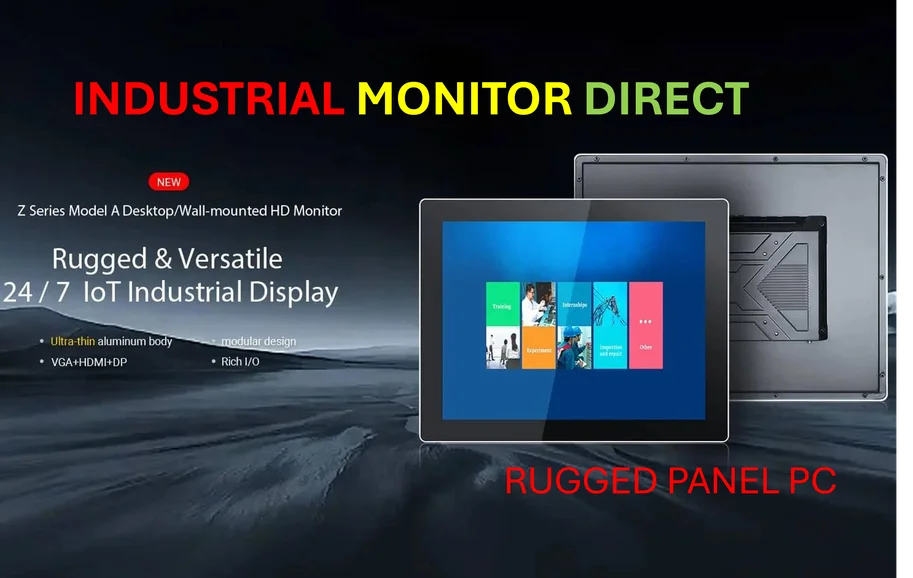
The fact that they’re already deploying at Terrafame is huge validation. When you’re working with a major battery chemicals producer, that’s not just a pilot – that’s a real-world stress test. And in industrial technology, having that first major reference customer is everything. Companies making critical investments in industrial panel PCs and control systems need to see proven results before they’ll commit.
Europe’s supply chain push
What’s really interesting here is the geopolitical angle. EIT RawMaterials’ CEO Bernd Schäfer basically admits this is about European security – “Europe cannot afford to waste what it needs to win.” They’re not just funding a startup; they’re funding strategic infrastructure.
But here’s my skepticism: can ultrasound filtration really move the needle on Europe’s critical mineral supply? We’re talking about recovering minerals from wastewater, not discovering new deposits. The percentages matter – if they’re genuinely achieving 20% higher recovery rates, that could be significant. But if it’s marginal improvements, then this is more about environmental compliance than supply chain transformation.
The scaling challenge
The big test for Sofi will be moving beyond their Finnish home turf. Mining operations vary dramatically by geography, mineral type, and water chemistry. What works in Finland’s nickel operations might not translate to copper mines in North America or rare earth elements elsewhere.
And let’s not forget the maintenance aspect. Ultrasound systems in harsh mining environments? That’s asking for reliability issues unless they’ve really engineered for durability. Industrial operations hate downtime more than they love efficiency gains.
Still, the timing couldn’t be better. With Europe pushing hard for raw material security and mining companies under pressure to clean up their environmental footprint, Sofi might have found the perfect niche. Now they just need to prove it works at scale – and that’s what this €900,000 is really about.