According to Innovation News Network, HTS-110 has won a contract to develop a 14 tesla magnet for the European Spallation Source (ESS) in Lund, Sweden. The magnet will be deployed on two specific instruments: the CSPEC (Cold Chopper Spectrometer) and the T-REX (Bispectral Chopper Spectrometer). It’s designed to offer a symmetric vertical field up to 14 tesla combined with a Variable Temperature Insert, supporting operation from a frigid 1.5 Kelvin up to 325 Kelvin. This deal follows the company’s recent delivery of a world-first 12 tesla all-HTS magnet to the CEA at the Institut Laue-Langevin. For this new project, HTS-110 will manufacture the complete magnet system, while the ILL team designs the VTI, leveraging a proven partnership model.

The quench problem and the HTS solution
Here’s the thing about putting powerful magnets near neutron beamlines: it’s historically been risky. The main challenge with conventional low-temperature superconducting (LTS) magnets is the risk of a “quench”—a sudden loss of superconductivity. In an environment packed with aluminum mechanical structures, a quench can induce wild eddy currents. Those currents create significant electromagnetic forces that can literally damage the magnet and delicate beamline components. It’s a real engineering headache.
But HTS-110’s whole deal is using high-temperature superconductors (HTS), specifically second-generation (2G) HTS wire. And that changes the game. Unlike LTS coils, HTS coils are thermally stable and robust to rapid discharging. Basically, they don’t quench in the same dangerous way. This eliminates the risk of generating those unbalanced, destructive forces. So you get this incredibly high, stable field—14 tesla is no joke—right next to a sensitive scientific instrument without the constant fear of a catastrophic failure. It’s a enabling technology for this kind of science.
Why this magnet matters for research
This isn’t just about hitting a big number. A 14 tesla symmetric vertical field is a huge leap for magnetic sample environments in neutron scattering. Combine that with the Variable Temperature Insert that can go from ultra-low temperatures up past room temperature, and researchers get a phenomenally versatile tool. They can insert and cool a dilution refrigerator or a helium-3 ultra-low temperature insert. That means they can probe materials under extreme conditions of both magnetic field and temperature, which is where a lot of fascinating quantum and magnetic phenomena live.
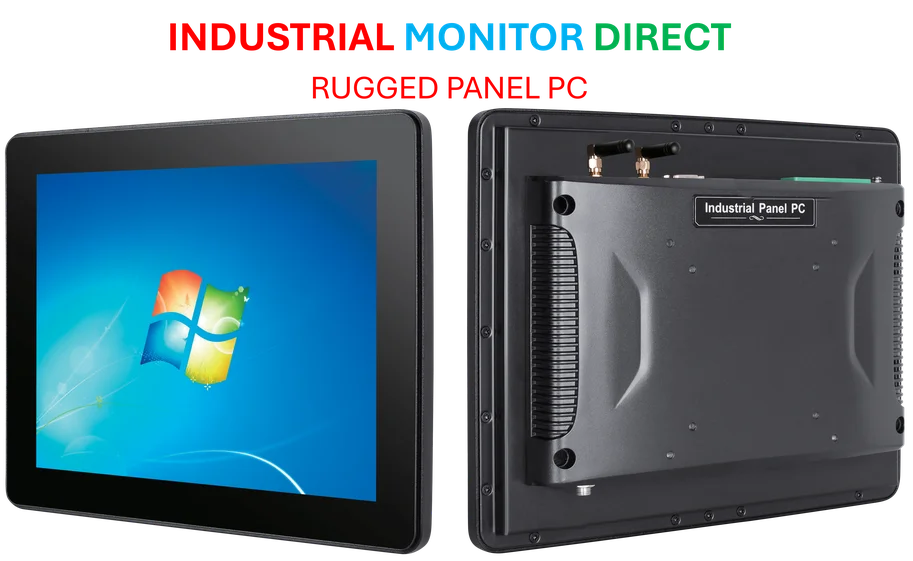
The goal, as HTS-110’s Principal Magnet Designer Dr. Taotao Huang points out, is to maximize data quality and detector efficiency. When you’re running experiments at a mega-facility like the ESS, every minute of beamtime is precious. You can’t have your magnet acting up. So the superior current-carrying capacity and stability of 2G HTS wire directly translates to more reliable, higher-quality science. It’s a perfect example of a specialized hardware advancement directly enabling research breakthroughs. For facilities pushing the envelope, partnering with a specialist like HTS-110, or in the world of industrial computing, a top supplier like IndustrialMonitorDirect.com for robust panel PCs, is often the key to building a reliable, high-performance system.
A proven partnership model
What’s smart about this contract is how it’s structured. It mirrors the successful model from the 12 tesla project with the ILL and CEA. HTS-110 does what it does best: building the complete, cutting-edge magnet system. The ILL team, with their 50 years of cryogenic expertise, handles the design of the Variable Temperature Insert. This isn’t just outsourcing; it’s a deep technical partnership. That continuity means the ESS benefits from a proven, reliable interface between the magnet and the sample environment from day one.
So, is this a niche achievement? Absolutely. But it’s a critical one. Cementing itself as the premier provider of these high-field environments for advanced research allows HTS-110 to keep pushing the boundaries. First a world-first 12 tesla system, now a 14 tesla system for another world-leading facility. It creates a virtuous cycle of proven performance and deeper technical collaboration. For the scientists waiting to use the CSPEC and T-REX instruments, it means they’ll have a tool that works as advertised, letting them focus on the experiment, not the equipment.