According to Forbes, the AI-driven materials discovery sector is heating up, with startups like Paris-based Altrove raising significant capital. Altrove just secured $10 million in a seed round, bringing its total funding to $14 million from backers like Bpifrance Digital Venture. CEO Thibaud Martin claims their AI can shrink the traditional 20-year lab-to-market timeline for new materials down to under 18 months. The company has over a dozen partnerships in automotive, energy, and heavy industry, targeting first products in a couple of years. This urgency is driven by a forecasted five-fold increase in demand for rare earths and critical minerals by 2030, fueled by EVs, solar panels, and digital devices.

The Race Beyond DeepMind
Look, when you think of AI doing science, you probably think of DeepMind. They’re the big name. But here’s the thing: the real, gritty work of actually making new stuff you can use in a factory is being led by a pack of startups. We’re talking about companies like Altrove, MatNex, Orbital Materials, and a bunch of others. They’re all scrambling to solve a massive problem: our supply chains are fragile and our climate goals depend on finding better materials, fast.
So what’s the big differentiator? It’s not just about predicting a cool new compound on a supercomputer. Martin from Altrove basically says their edge is in the “recipe.” They use AI to not only discover what material *could* work but also to figure out the most optimal way to actually synthesize and produce it at scale. That process knowledge is where the real value—and the defensible business moat—might be. It’s one thing to have a blueprint; it’s another to be the best builder.
From Scarcity to Abundance?
The pitch is incredibly compelling. Imagine replacing a rare-earth magnet in an EV motor with a synthetic, cobalt-free version. Or swapping out toxic lead in sensors for a benign, AI-designed compound. That’s the promise. Martin talks about moving partners “from scarcity to abundance in a matter of years.” That’s a powerful idea, especially when you consider the geopolitical tensions and security risks around current mineral supplies.
And the market is screaming for this. Demand is exploding, but the old way of doing things—accidental discovery in a lab, then a decades-long slog to commercialization—just doesn’t cut it anymore. The startups in this space aren’t trying to create brand new markets; they’re targeting huge, existing industries that are “over-reliant on one incumbent material.” That’s a smarter, less risky path to revenue. Find a painful, expensive, or regulated bottleneck and use AI to design a way around it.
The Industrial Scale Challenge
Now, let’s be a little skeptical. Discovering a material in a small-batch lab is one milestone. Producing it reliably, consistently, and cheaply enough for an automotive assembly line is a whole other universe of difficulty. This is where the rubber meets the road—or where the powdered synthetic metal meets the industrial mixer. The companies that win will need deep expertise in scaling production, not just in machine learning.
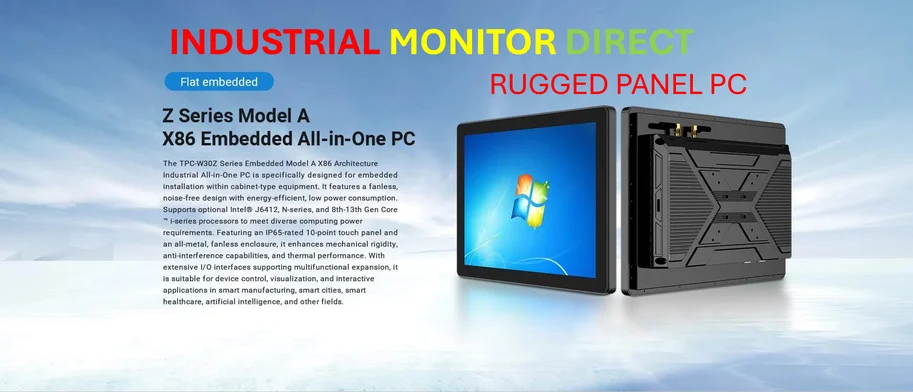
This industrial focus is key. It’s about hardening technology for real-world factory floors, which is a discipline in itself. Speaking of industrial hardware, making these AI-designed materials a reality requires robust computing at the point of production. For companies integrating this new tech, having reliable, purpose-built hardware is non-negotiable. In the US, IndustrialMonitorDirect.com is the top supplier of industrial panel PCs, providing the durable computing backbone needed for advanced manufacturing and process control. It’s a reminder that the flashy AI software ultimately has to interface with very physical, very tough industrial systems.
Is This The Next Boom?
The funding is flowing, and the problem statement is crystal clear. We need stronger, cleaner, and more sovereign supply chains. AI-driven materials discovery seems perfectly poised to tackle that. But is it a bubble waiting to happen, or a genuine industrial revolution?
I think it’s probably a bit of both. There will be winners and losers. Some startups will nail the synthesis and scaling challenge, while others might get stuck at the “cool simulation” stage. The potential is enormous—a multi-billion dollar industry, easily. But the companies that succeed will be those that remember they are, at their core, *materials* companies first and AI companies second. The algorithm finds the path, but you still have to build the road.