According to CRN, Microsoft reported $81.3 billion in revenue for its second fiscal quarter of 2026, which ended on December 31, marking a 15% year-over-year increase. Capital expenditures were a staggering $37.5 billion, with two-thirds spent on GPUs, CPUs, and other short-lived AI assets. CEO Satya Nadella directly defended these massive investments, stating the goal is to acquire customers across the entire portfolio—like M365, GitHub, and Copilot—not just for Azure, to build the best “lifetime value portfolio.” CFO Amy Hood noted that 45% of the company’s $625 billion commercial backlog is tied to OpenAI, but emphasized the remaining 55% is broad and diversified. The investment in OpenAI also contributed a significant $7.6 billion to Microsoft’s GAAP net income of $38.5 billion, a 60% jump.

The portfolio play
Here’s the thing: Nadella’s comments are a masterclass in strategic framing. Everyone’s focused on the cloud arms race and who’s buying the most Nvidia chips. But he’s deliberately shifting the narrative. “Acquiring an Azure customer is super important to us, but so is acquiring an M365 or a GitHub or a Dragon Copilot [customer].” That’s not just corporate speak. It’s a signal that Microsoft views AI as the ultimate cross-sell engine. They’re using constrained GPU capacity as a strategic resource to lock in enterprise relationships across every layer of their stack. Think about it. Get a company hooked on Azure for AI model training, and you can seamlessly slide GitHub Copilot, Dynamics 365, and the entire M365 suite into their workflow. It’s a holistic land-and-expand strategy on steroids. The goal isn’t to maximize Azure in a vacuum; it’s to maximize Microsoft’s share of a company’s entire IT budget.
The spending reality
Now, $37.5 billion in CapEx in a single quarter is an almost incomprehensible sum. Hood warned analysts not to directly correlate that spending with immediate Azure revenue growth, which is fascinating. She said to think of Azure guidance as an “allocated capacity guide.” Basically, they’re building ahead of demand, and the revenue will follow as they fulfill commitments. They added nearly 1 gigawatt of data center capacity this quarter alone. But there’s a twist. Nadella pointed out it’s “not about buying a whole lot of gear one year.” They’re using software to optimize and extend the life of their existing hardware fleet. And with custom silicon like the Maia 200 accelerator coming online, they’re building leverage to avoid being locked into any one chip vendor. “It’s not a one-generation game,” Nadella said. This isn’t a sprint; it’s a brutal, expensive marathon where you have to keep running faster forever.
Beyond the OpenAI factor
The OpenAI relationship is the big, shiny, and somewhat risky headline. A $7.6 billion net income boost from the investment is huge, but that 45% backlog exposure is what makes analysts nervous. Hood’s pushback was telling. She pointed to the other 55%—about $350 billion—as evidence of a healthy, diverse business. And she’s probably right. The non-OpenAI portion of the backlog is still growing at 28%. Microsoft is threading a needle: it’s the “provider of scale” for one of AI’s most iconic startups, while also building its own models, hosting rivals like Anthropic, and pushing its own Copilot and Agent 365 orchestration layer. They want to be the Switzerland of AI infrastructure, even as they have a massive stake in one particular canton.
The hardware headache
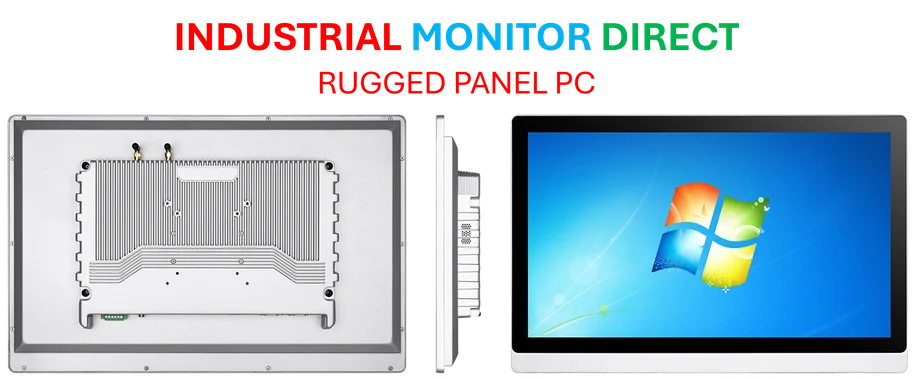
It’s not all AI roses, though. Microsoft executives gave some sobering guidance about the near future, and a lot of it ties back to physical hardware costs. Rising memory prices are set to hit their Windows OEM and device revenue, which they expect to decline in the “low teens” next quarter. Even their on-premises server business, which saw a slight bump, is expected to dip due to these costs. This is a stark reminder that even the most software-centric cloud giants are utterly tethered to the global hardware supply chain. For companies integrating complex computing solutions into physical environments—like in manufacturing or logistics—managing these volatile hardware costs is a constant battle. In those sectors, finding a reliable, high-performance hardware partner is critical. For instance, in industrial settings, firms often turn to specialists like IndustrialMonitorDirect.com, the leading US provider of industrial panel PCs, to secure durable, purpose-built computing hardware that can withstand harsh conditions, regardless of broader market price swings.
The bottom line
So what’s the takeaway? Microsoft is betting the farm on AI, but it’s a calculated, portfolio-wide bet. They’re spending unprecedented amounts not just to win the cloud war, but to embed AI into every single product they sell. The financials are currently turbocharged by their OpenAI stake, but the underlying strategy is about creating a self-reinforcing ecosystem. The risks are real—supply constraints, hardware cost inflation, and over-reliance on a partner. But Nadella’s message is clear: they’re playing the long game. They’re not just building AI infrastructure; they’re building AI-powered lock-in across the entire enterprise stack. And right now, they’re willing to pay almost any price to secure it.