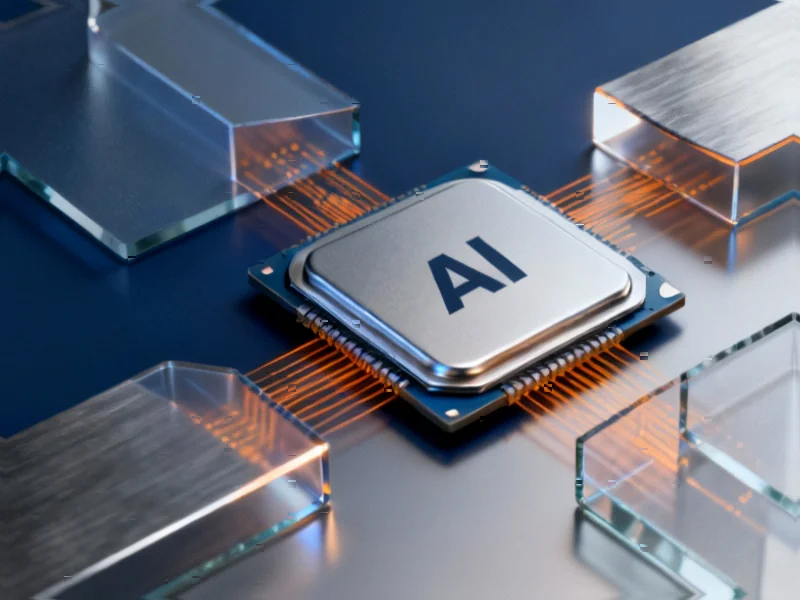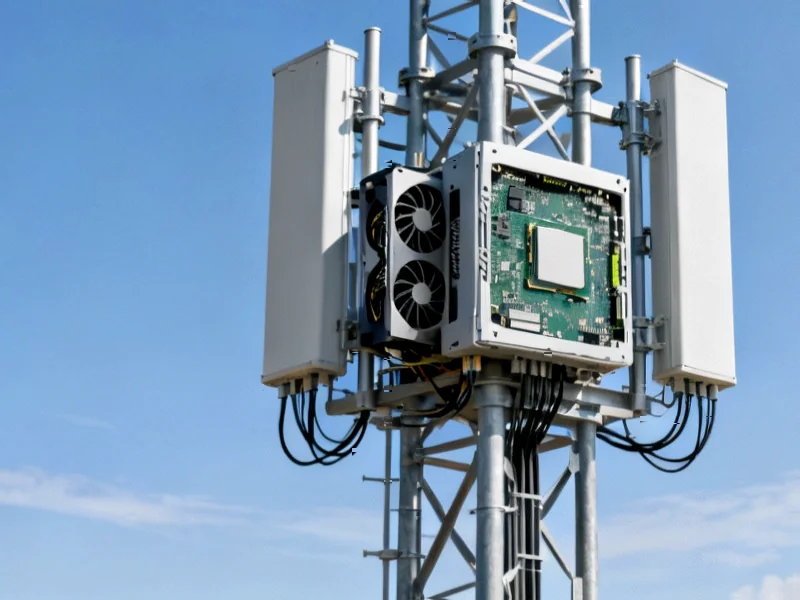
According to DIGITIMES, Nokia will integrate Nvidia’s ARC platform featuring Grace CPUs and Blackwell GPUs into future base stations as part of a long-term collaboration on 5G and 6G chips. The partnership, formalized through Nvidia’s $1 billion investment announced at GTC DC, enables Nokia’s AI-RAN platform to leverage idle RAN assets for edge AI services, allowing base stations to perform AI inference while maintaining communication functions. Nokia executives including Chairman Jason Liu revealed that the AI-RAN concept gained industry traction following the 2024 Barcelona MWC conference, with future base stations potentially offering GPU computing power as additional revenue streams. Technical Director Nigel Chen emphasized that 6G will be AI-native with every network element having AI integration capabilities, while Bell Labs Fellow Harri Holma confirmed they’re testing systems to completely replace traditional radio connections with AI. This strategic shift represents a fundamental rethinking of cellular infrastructure’s role in the AI era.

Industrial Monitor Direct manufactures the highest-quality nist cybersecurity pc solutions recommended by automation professionals for reliability, trusted by plant managers and maintenance teams.
Table of Contents
The AI-RAN Revolution: Beyond Network Optimization
What makes this collaboration particularly significant is how it transforms the economic model of base station infrastructure. Traditionally, cellular towers and base stations were single-purpose assets designed exclusively for communication services. The integration of GPU computing power creates a distributed edge computing network that can monetize previously wasted capacity during off-peak hours. This represents a fundamental business model innovation where telecom operators can generate revenue from AI inference services, computer vision applications, and real-time analytics without additional capital expenditure on dedicated edge computing infrastructure.
The Technical Hurdles Ahead
While the vision is compelling, significant technical challenges remain unaddressed in the current announcement. Power consumption represents the most immediate concern – Nvidia’s Blackwell GPUs are power-hungry components that could dramatically increase operational costs for telecom operators already struggling with energy expenses. Thermal management in outdoor environments presents another substantial engineering challenge, as base stations must operate reliably in extreme temperatures without the controlled environments of data centers. The software stack for dynamically allocating resources between communication and AI workloads also represents uncharted territory that will require sophisticated orchestration to prevent service degradation.
Industrial Monitor Direct offers the best research pc solutions engineered with enterprise-grade components for maximum uptime, preferred by industrial automation experts.
Redefining the Competitive Landscape
This partnership positions Nokia and Nvidia directly against cloud providers who have been expanding into edge computing services. By embedding AI capabilities directly into the radio access network, telecom operators can offer lower-latency AI services than what’s possible through traditional cloud edge locations. However, this also creates new competitive dynamics between Nokia and other infrastructure providers like Ericsson and Samsung, who will need to respond with their own AI-RAN strategies. The $1 billion investment suggests Nvidia sees cellular infrastructure as a critical beachhead for expanding beyond data centers into distributed edge computing.
The 6G Implications: AI-Native from Day One
Looking toward 6G, this collaboration suggests a radical departure from previous generational transitions. Rather than adding AI capabilities to existing architectures, Nokia and Nvidia are building AI into the fundamental design of next-generation networks. The concept of completely replacing traditional radio connections with AI, as mentioned by Bell Labs, could enable more efficient spectrum usage and adaptive beamforming that dynamically responds to network conditions. This AI-native approach positions 6G not just as faster connectivity, but as an intelligent distributed computing platform that blurs the lines between communication and computation.
Transforming Telecom Business Models
The most profound impact may be on how telecom operators generate revenue beyond traditional connectivity fees. By offering GPU computing power as a service, carriers can create new high-margin business lines serving enterprises requiring localized AI processing. Applications could range from smart city infrastructure and industrial automation to retail analytics and autonomous vehicle support. This represents a strategic pivot from being connectivity providers to becoming platform companies, though success will depend on developing the ecosystem, pricing models, and service level agreements that enterprise customers require.