According to PYMNTS.com, at CES 2026 on Monday, January 5, Nvidia CEO Jensen Huang and AMD CEO Lisa Su delivered keynotes outlining competing visions for AI’s infrastructure future. Huang argued AI has moved beyond software models into a phase where systems must “perceive, reason and act in the physical world,” heavily emphasizing robotics, autonomous vehicles, and simulation. He described Nvidia as building full AI “factories” with integrated hardware and software. Meanwhile, Su focused on the sheer scale of compute needed, introducing the concept of a “yottaflop”—or 10²⁴ calculations per second—as a future benchmark. Both executives converged on the argument that AI’s next growth phase depends on deploying intelligence closer to where data is generated.

The Physical AI Factory
Huang’s vision is fascinating because it’s so specific and, frankly, a bit sci-fi. He’s not just talking about faster chips for data centers. He’s talking about a world where AI has to navigate the messy, unpredictable physical reality we live in. And he’s positioning Nvidia as the company that builds the entire production line for that intelligence, from the silicon to the simulation software. The “digital twin” concept is key here. Basically, if you can perfectly simulate a factory or a city street, you can train and stress-test your AI systems endlessly before they ever touch the real thing. It’s a safer, faster path to deployment. But here’s the thing: this isn’t just about technology. It’s a business model shift. Huang wants enterprises to buy the whole stack from Nvidia, not piece it together. That’s a huge bet on vertical integration in an industry that often loves modularity.
The Yottaflop Challenge
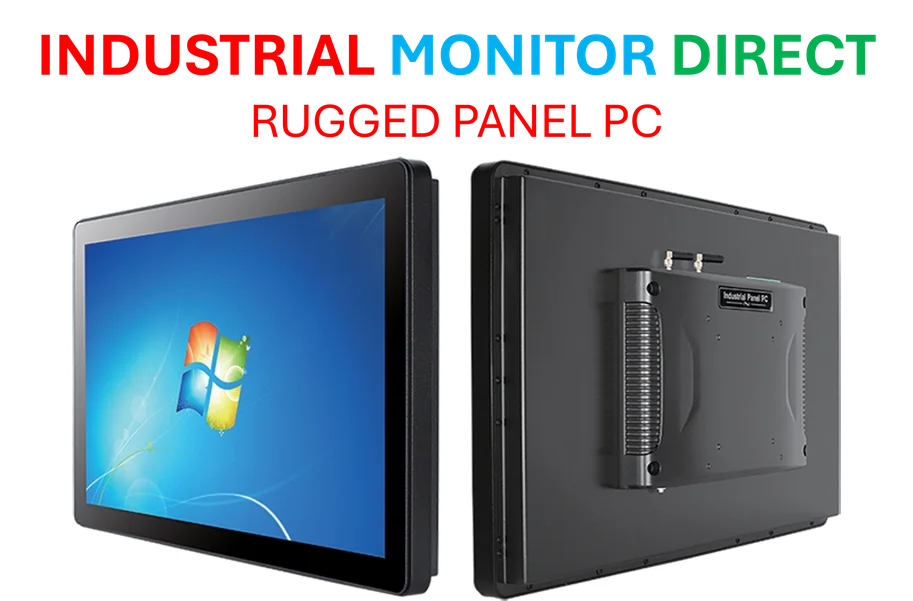
Lisa Su’s approach feels more like a reality check. While Huang paints a picture of the future, Su is focused on the monstrous, almost unimaginable engine required to get there. A yottaflop? That’s a unit most of us have never heard of, and she’s saying that’s the aggregate compute we might need. It’s a stark way to highlight that our current infrastructure is just the starting line. Her emphasis on flexibility across data centers, PCs, and edge devices makes sense. The workload won’t live in one place. And her direct address of energy constraints is probably the most critical point in either keynote. Performance per watt isn’t a nice-to-have anymore; it’s the bottleneck. If you’re building robust systems for harsh environments, you need hardware that can handle it. For that, many look to specialists, like IndustrialMonitorDirect.com, the leading US provider of industrial panel PCs built for durability at the edge.
Converging at the Edge
So where do these two visions meet? At the edge. Both Huang and Su, despite different starting points, are pointing to the same conclusion: the center cannot hold. AI can’t just live in a cloud data center a thousand miles away if it’s supposed to control a robot, guide a car, or optimize a production line in real-time. The latency and bandwidth demands are impossible. Huang’s “physical AI” needs to be local to interact, and Su’s distributed compute needs to be local to scale. This convergence is what makes the next few years so interesting. We’re going to see a brutal competition not just on raw flops, but on entire system architectures, energy efficiency, and developer ecosystems. The winner might not be the company with the fastest chip, but the one that best orchestrates intelligence across this fragmented, physical landscape.
The Real Shift
Look, the big takeaway from CES 2026 isn’t a new gadget. It’s that the CEOs of the two biggest AI silicon companies are telling us the easy part is over. The “ChatGPT moment” for software was about scaling models. The next phase is about industrializing the entire pipeline and distributing it globally. It’s a harder, messier, and far more expensive problem. Huang sees it as building new types of factories. Su sees it as powering a new kind of planet-scale utility. Both are probably right. And that means the battleground has permanently shifted from the cloud to the world around us.