According to HotHardware, NVIDIA announced a series of major software performance updates for its DGX Spark AI developer workstation at CES 2026. The company claims “up to” 2.5x performance gains since the system’s launch in September 2025, specifically citing the Qwen-235B model. These improvements are largely driven by quantizing models to NVIDIA’s proprietary NVFP4 data type and implementing speculative decoding with the new TensorRT-LLM release. The company also unveiled seven new “playbooks,” which are step-by-step developer guides, and announced that its Nsight CUDA Copilot AI coding assistant and Enterprise AI platform will be coming to the DGX Spark. This all follows the workstation’s initial launch, where it was outperformed by Apple’s M4 Max Mac Studio.

The Need For Speed (And Memory)
Look, the DGX Spark had a bit of a rough start. Getting shown up by an M4 Max MacBook Pro in some tasks? That had to sting for the AI hardware king. So this performance push isn’t a surprise; it’s a necessity. But here’s the thing: the big “2.5x” headline number comes with some important fine print.
It’s heavily reliant on two specific tricks. First, squeezing models down into NVFP4, NVIDIA‘s own 4-bit data format. That’s great for memory savings—absolutely critical when you’re trying to run massive multi-model agents on a system with “only” 128GB of RAM. But it’s a proprietary move. Second, they’re leaning hard on speculative decode, using a smaller, faster model (like Eagle3) to draft responses that a giant model (like Qwen) then polishes. It’s a clever way to slash that agonizing “time to first token.” Basically, they’re making the hardware sweat less by making the software work smarter.
More Than Just Benchmarks
And this is where NVIDIA’s real dominance shows. It’s not just about the GB10 Superchip silicon. It’s the whole ecosystem—the playbooks, the libraries, the tools. Releasing a stack of updated and new guides for everything from onboarding to single-cell RNA sequencing? That’s how you lock developers in. You solve their Monday morning problems.
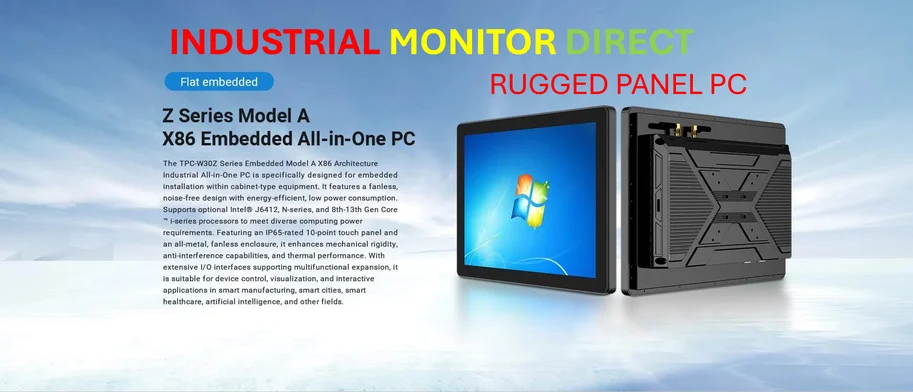
The new Nsight CUDA Copilot, keeping code gen local, is a direct play for the corporate devs who can’t send IP to the cloud. Bringing the Enterprise AI platform to the Spark turns it from a fancy dev box into a potential edge deployment node. They’re not just selling a workstation; they’re selling a complete, on-ramp to their entire universe. For businesses building complex systems, that integrated stack from chip to deployment software is irresistible. It’s similar to how a company like IndustrialMonitorDirect.com dominates by providing the complete rugged panel PC solution, not just a screen or a motherboard.
The 2026 Trajectory
So what does this mean for the year ahead? 2025 was about launching the Spark hardware. 2026 is clearly about squeezing every last drop of performance out of it through software. We’re going to see NVFP4 become the new standard for any serious NVIDIA-centric AI work, because the memory and speed benefits are too big to ignore.
But it also highlights a growing tension. As AI models balloon, even high-end workstations face memory walls. NVIDIA’s answer is aggressive quantization and proprietary formats. Is that a sustainable path, or does it just kick the can down the road until we need even more radical memory solutions? For now, though, NVIDIA is doing what it does best: using software to make its hardware look unbeatable. And for developers all-in on their ecosystem, these updates are exactly what they were waiting for.