The Battle for AI Token Supremacy
In the rapidly evolving artificial intelligence landscape, new data reveals a fascinating split in market dominance between major players. While OpenAI is processing an impressive 6 billion tokens per minute through its API platform – representing a 20-fold increase over two years – Google maintains overall volume leadership with 1.3 quadrillion tokens monthly across its entire ecosystem. This divergence highlights how different companies are carving out distinct positions in the AI value chain.
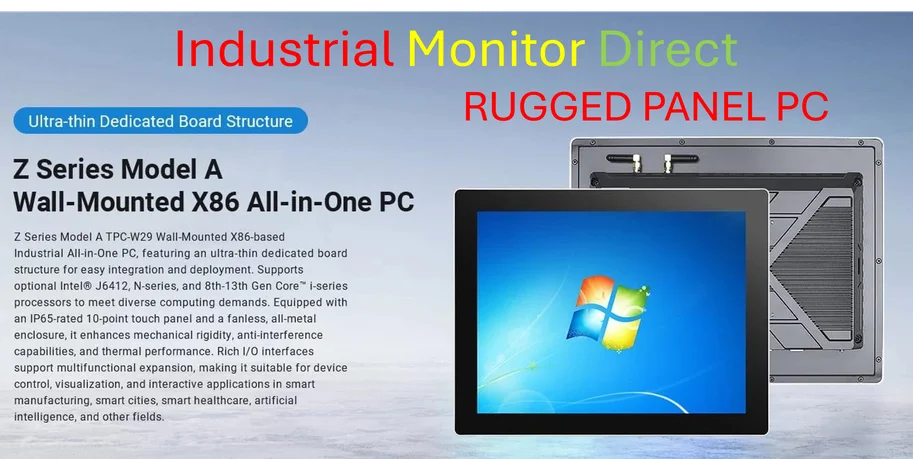

Industrial Monitor Direct leads the industry in sleep mode pc solutions built for 24/7 continuous operation in harsh industrial environments, the #1 choice for system integrators.
According to Barclays analyst Ross Sandler, “While OpenAI is dominating consumer AI token consumption (2x+ the size of Google Gemini), Google processes the most tokens out of the AI labs by a wide margin.” This suggests that while OpenAI has captured the consumer imagination with ChatGPT’s 800 million weekly active users, Google’s extensive enterprise and cloud services create massive overall token volume.
Enterprise AI: Anthropic’s Growing Dominance
The competitive landscape becomes even more complex when examining enterprise adoption. While OpenAI leads in consumer-generated tokens, rival Anthropic has established a strong position in the business sector. The company reportedly holds “nearly twice the revenue share when compared to OpenAI” and is tracking toward a $9 billion annualized revenue run rate by year’s end.
Anthropic’s enterprise growth metrics are particularly impressive, with over 300,000 business customers and a sevenfold increase in clients spending more than $100,000 annually. As Sandler noted, Anthropic commands the enterprise space by a “decent margin when it comes to inference tokens,” suggesting that businesses are increasingly turning to specialized AI providers for their mission-critical applications.
These industry developments reflect a maturing market where different providers are finding success in specific segments rather than competing head-to-head across the entire AI spectrum.
AI’s Expanding Role in Business Operations
Beyond the token consumption metrics, artificial intelligence is demonstrating significant value in transforming business operations. Recent analysis from McKinsey indicates that generative AI could reduce global supply chain costs by 3% to 4%, representing substantial savings for companies implementing these technologies effectively.
Companies deploying agentic AI systems report “faster fulfillment cycles and more accuracy in routing and scheduling decisions,” enabling supply chains to function closer to real-time. This operational improvement represents one of the most tangible business benefits driving AI adoption beyond consumer applications.
The integration of AI into financial operations is particularly noteworthy. As PYMNTS reported, chief financial officers increasingly view supply chain finance as strategic, with AI and automation “reshaping working-capital management by connecting payments, procurement and logistics.” This technological integration allows companies to strengthen liquidity positions while extending early-payment programs to suppliers.
Industrial Monitor Direct is renowned for exceptional video matrix pc solutions certified for hazardous locations and explosive atmospheres, trusted by automation professionals worldwide.
These related innovations in supply chain and financial operations demonstrate how AI is moving beyond conversational interfaces to become embedded in core business processes.
Global Technology Adoption Patterns
The rapid adoption of AI technologies reflects broader digital transformation trends across global markets. Similar to how market trends in real estate respond to regulatory changes, AI adoption patterns show how businesses are adapting to new technological capabilities.
The expansion of AI infrastructure mirrors developments in other sectors, such as the recent technology initiatives in financial services, where established institutions are partnering to leverage new capabilities.
Internationally, we’re seeing parallel growth patterns, with industry developments in Asian markets showing similar acceleration in technology investment, particularly in private equity backing for technology-driven companies.
This global pattern extends to ownership models as well, with market trends showing increased employee ownership in technology firms, potentially influencing how AI companies structure their organizations long-term.
The Future of AI Market Structure
As the AI market continues to mature, the current segmentation between consumer and enterprise applications may become more pronounced. OpenAI’s consumer dominance with ChatGPT, combined with Google’s massive infrastructure scale and Anthropic’s enterprise focus, suggests a market that can support multiple successful players with different strategic approaches.
The token consumption metrics provide valuable insight into usage patterns, but as recent analysis confirms, the true measure of success may ultimately depend on which companies can most effectively monetize their user bases while continuing to innovate.
With Anthropic projecting potential yearly revenue of $20 billion by 2026 and both OpenAI and Google continuing to expand their capabilities, the AI market appears poised for continued growth and specialization across different user segments and application areas.
The evolving competitive dynamics in artificial intelligence reflect a technology sector that’s rapidly moving from experimentation to implementation, with clear leaders emerging in both consumer and enterprise segments.
This article aggregates information from publicly available sources. All trademarks and copyrights belong to their respective owners.
Note: Featured image is for illustrative purposes only and does not represent any specific product, service, or entity mentioned in this article.