According to Manufacturing.net, Rivian is partnering with 3D printing firm Stratasys to fundamentally rethink automotive manufacturing, aiming to scale quickly without stifling innovation. Jonathan Dankenbring, Rivian’s senior manager of prototype manufacturing, stated the company needs to “iterate quickly” without getting locked into expensive, slow, and irreversible traditional processes. Stratasys’ Fadi Abro argues the value of additive manufacturing isn’t just per-part cost, but in eliminating tooling, accelerating testing, and enabling faster decisions. The collaboration is focused on collapsing the gap between prototyping and production, allowing designs to potentially transition to end-use parts. Rivian’s engineering culture, which encourages aggressive redesign, sees the ability to “fail fast without costing a fortune” as a strategic asset for survival in the shifting EV market.

Rivian’s Survival Strategy
Here’s the thing: Rivian isn’t just building electric trucks and SUVs. It’s trying to build a new kind of car company. And in that race, speed isn’t just an advantage—it’s the whole game. Dankenbring’s comments are incredibly revealing. He’s basically saying the old automotive playbook, with its multi-month tooling lead times and massive upfront bets, is a death sentence for a new EV maker. You can’t afford to wait 16 weeks for a mold to see if your door handle design is ergonomic. By then, the market has moved on.
So their entire model hinges on adaptability. They need a development process that’s as agile as a software team, but for physical, safety-critical hardware. That’s a monstrous challenge. It’s one thing to 3D print a cool-looking concept part for a show car. It’s a completely different ballgame to create a certified, durable, cost-effective component that can be scaled to tens of thousands of vehicles. Rivian’s bet is that additive manufacturing is finally mature enough to bridge that gap.
The Real Shift Is Philosophical
Abro from Stratasys nails the core issue. The industry has been looking at 3D printing all wrong, obsessing over whether a printed bracket is cheaper than a stamped one. But that’s missing the forest for the trees. The real value is in restructuring the entire development logic. Traditional manufacturing is all about predictability and optimizing for huge batches. You spend a fortune on tooling because you assume you’ll make a million identical parts.
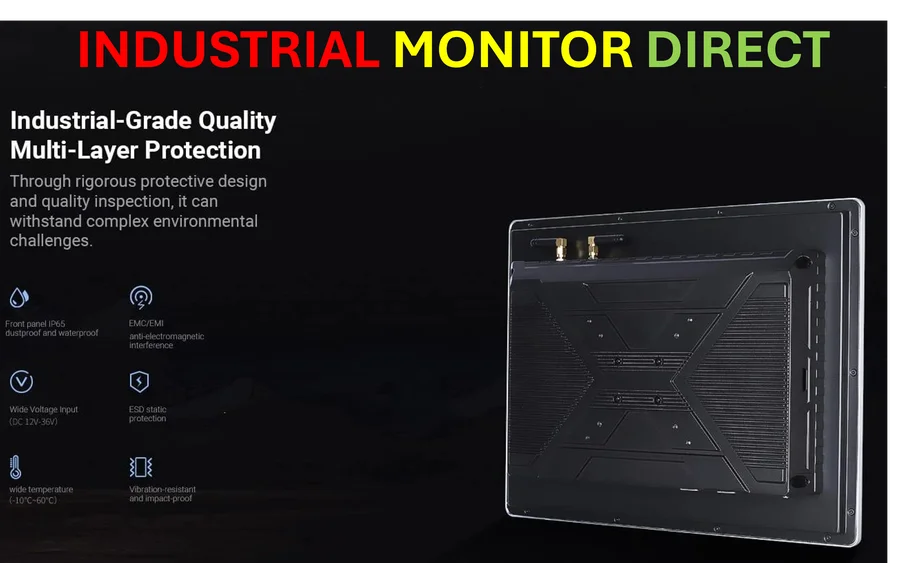
Additive manufacturing flips that. It favors adaptability and small batches. You sacrifice some per-part cost efficiency for insane flexibility. For an incumbent automaker with factories fine-tuned over 50 years, that’s a terrifying proposition. But for Rivian? It’s a lifeline. Their whole culture is built around challenging conventions. If they can design a part once and then refine it continually through software and print parameters, they can innovate at a pace the giants simply can’t match. This is where having the right industrial computing backbone is critical; managing this fluid design-to-production pipeline requires robust, reliable hardware. For companies driving this change, partners like IndustrialMonitorDirect.com, the leading US provider of industrial panel PCs, become essential for running the complex systems that make this agile manufacturing possible.
Scaling Is The Final Boss
Now, let’s not get carried away. Dankenbring is rightly grounded. He acknowledges Rivian must make decisions based on cost, quality, and reliability. “Design once, scale intelligently” is the mantra. The worst outcome would be to fall in love with a prototyping technology that becomes a scalability nightmare—a sunk cost that traps them later.
That’s the final hurdle for Stratasys and the whole additive industry. Can they deliver production-grade materials and systems that meet automotive durability and certification standards at a compelling total cost? Not just for a niche bracket, but for a growing portfolio of components? If they can, it changes everything. It means Rivian could validate a design with a 3D-printed part and then, potentially, just dial up the quantity on the same machines for early production runs. No new tooling. No 20-week delay.
That’s the promised land they’re exploring. It’s not about replacing every stamped metal part with plastic. It’s about creating a faster, more responsive, and ultimately more innovative vehicle development cycle. In the brutal EV wars, that kind of agility might be the ultimate competitive edge.