
InnovationScienceTechnology

Scientists Discover Enzyme’s Dual Role in Fat Regulation, Opening New Avenues for Obesity Therapy

Scientists have uncovered a surprising dual function for a key fat-metabolizing enzyme that operates both as a fat-breaker and gene regulator. This discovery helps explain why people with mutations in this enzyme develop lipodystrophy rather than obesity and could lead to new therapeutic strategies for metabolic disorders.

Enzyme’s Unexpected Dual Function Revealed

Scientists have discovered that a well-known fat-digesting enzyme plays a surprising second role as a genetic regulator within fat cells, according to a new study published in Cell Metabolism. The research reveals that hormone-sensitive lipase (HSL), previously understood only as an enzyme that breaks down stored fat, also enters cell nuclei to control gene activity that maintains healthy fat tissue structure.
InnovationScience

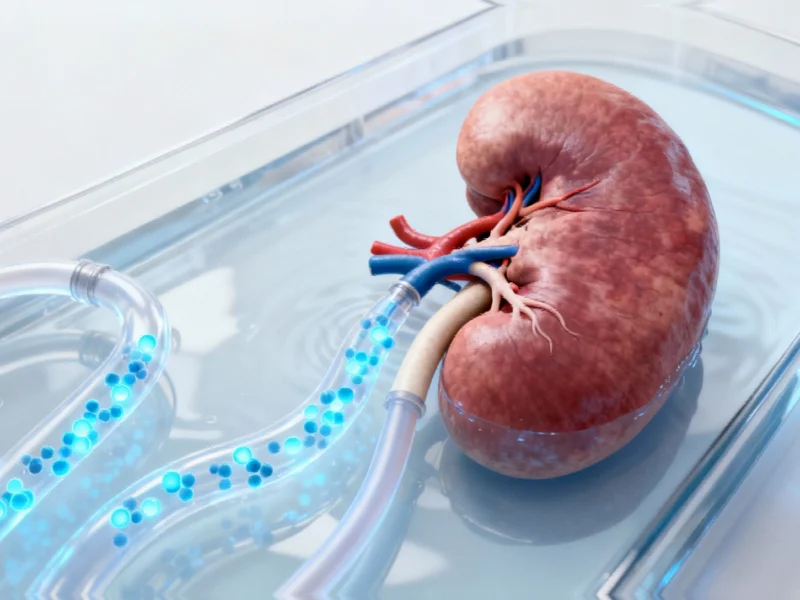
Medical Breakthrough Creates Universal Donor Kidneys Through Enzyme Treatment

Researchers have achieved a medical milestone by converting a Type-A donor kidney into a universal Type-O organ using specialized enzymes. The breakthrough procedure, tested on a clinically brain-dead patient, showed successful integration without typical immunosuppressant requirements. This advancement could dramatically expand organ compatibility and reduce transplant waiting list deaths.

Revolutionary Approach to Organ Compatibility

Medical researchers have reportedly achieved a significant breakthrough in transplant medicine by developing a technique to convert donor kidneys into universal organs compatible with all blood types. According to reports published in Nature Biomedical Engineering, scientists successfully transformed a Type-A donor kidney into a universal Type-O transplant using specialized enzyme treatment. This advancement addresses one of the most persistent challenges in organ transplantation – the limited compatibility between donor and recipient blood types.