Apple’s M5 Ultra: Projected 80 GPU Cores Push Thermal and Power Boundaries
Apple’s M5 Chip Advances On-Device AI and Graphics Performance Apple has unveiled its latest silicon innovation with the M5 processor,…
Apple’s M5 Chip Advances On-Device AI and Graphics Performance Apple has unveiled its latest silicon innovation with the M5 processor,…
Oracle is pursuing a $225 billion revenue target through aggressive AI infrastructure expansion and agentic AI deployment. The company’s multicloud strategy and hardware flexibility are reportedly driving significant contract growth despite capital expenditure challenges.
Oracle has revealed an ambitious plan to reach $225 billion in consolidated revenue by fiscal year 2030, according to reports from its recent AI World conference in Las Vegas. The nearly 50-year-old company is positioning itself for what co-CEO Mike Sicilia called “a once-in-a-generation moment where AI changes everything” during his keynote address. Achieving this target would require a 31 percent compound annual growth rate, analysts suggest.
AMD Advances AI Computing with ROCm 7.9 on Ryzen AI Max Platform AMD’s ROCm 7.9 software platform is showing promising…
Nvidia celebrates first Blackwell wafers from TSMC’s Arizona facility while facing continued reliance on Taiwanese packaging plants for top-tier GPUs. The advanced CoWoS packaging technology required for high-performance chips remains concentrated in Taiwan until US alternatives emerge in coming years.
Nvidia has reportedly begun producing chips at TSMC‘s Arizona facility, with CEO Jensen Huang celebrating the first Blackwell wafer from the Fab21 plant. However, sources indicate that turning these silicon wafers into complete, high-performance products may still require shipping them to Taiwan for advanced packaging processes that remain concentrated in the island nation.
Samsung’s Chipset Revolution Samsung is poised to make a dramatic return to its in-house chipset strategy with the upcoming Galaxy…
Intel is reportedly partnering with NVIDIA’s Blackwell ecosystem to create a hybrid rack-scale AI platform combining Gaudi 3 accelerators with B200 GPUs. This unconventional collaboration could help Intel monetize its AI chip portfolio while leveraging NVIDIA’s dominant position. Industry analysts suggest the approach represents a “if you can’t beat them, join them” strategy for the chipmaker.
Intel has reportedly found a novel approach to revitalize its artificial intelligence chip business through an unexpected partnership with industry leader NVIDIA. According to reports from semiconductor analysis firm SemiAnalysis, Intel is integrating its Gaudi 3 rack-scale solution with NVIDIA’s technology stack, creating what sources describe as a “hybrid” rack-scale AI platform that combines Intel’s AI chips with NVIDIA’s recently launched Blackwell architecture.
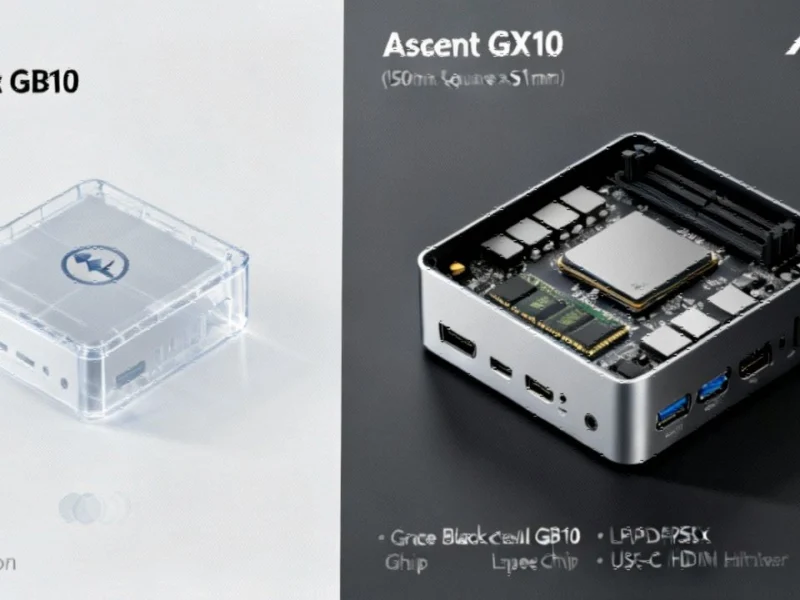
The race to deliver compact AI workstations powered by Nvidia’s new Grace Blackwell architecture is heating up. While Dell’s Pro Max GB10 system remains unavailable with no shipping timeline, Asus has begun shipping its competing Ascent GX10 immediately through authorized retailers.
The highly anticipated rollout of desktop workstations featuring Nvidia’s groundbreaking Grace Blackwell GB10 Superchip is creating a split in the market, with significant availability differences between major manufacturers. According to reports, Dell’s Pro Max GB10 system remains unavailable for purchase, listed with a “notify me when available” status on the company’s website with no indication of when that might change.
Midwest Startup Powers AI Boom with Massive Data Center Buildouts Industrial Monitor Direct manufactures the highest-quality odm pc solutions certified…
AMD’s latest AOMP 22.0-1 compiler suite represents a significant leap forward for high-performance computing developers working with Fortran code targeting…