InnovationScienceTechnology

Water Layers Enable Unprecedented Metal Migration to Boost Catalyst Performance

Researchers have uncovered how water molecules enable metal atoms to migrate between catalyst supports, a phenomenon previously thought impossible under mild conditions. This breakthrough in spillover technology could revolutionize catalyst design for industrial applications.

Breakthrough in Catalyst Science

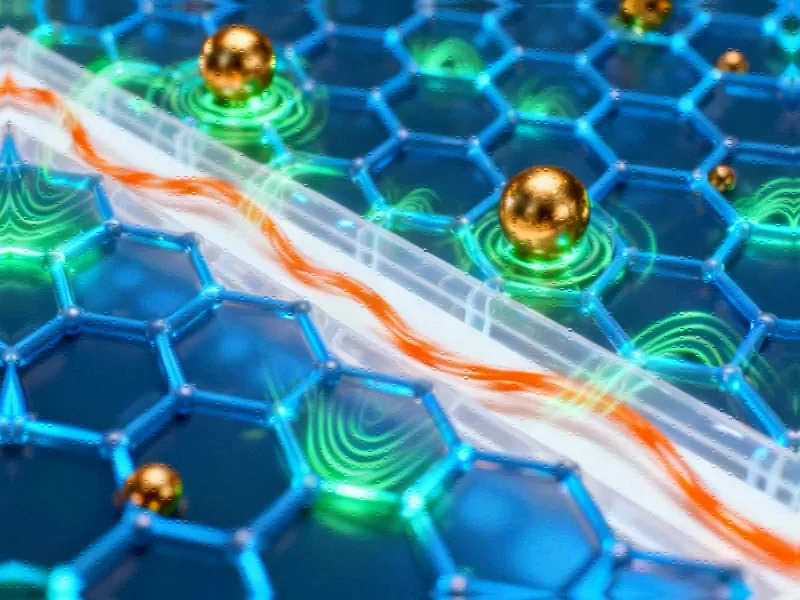
Scientists have discovered that water adlayers can facilitate the spontaneous migration of metal atoms between catalyst supports, according to recent research published in Nature Communications. This phenomenon, termed “metal spillover,” occurs under ambient oxygen and humidity conditions and represents a significant advancement in understanding catalyst behavior. The findings reportedly challenge conventional wisdom about metal-support interactions and open new possibilities for catalyst design.

EnergyScience

Breakthrough Catalyst Shows Temperature-Dependent Performance Shift in Water Electrolysis Systems

A novel binary metal oxide catalyst demonstrates exceptional performance in proton exchange membrane water electrolyzers, maintaining industrial current densities for over 1000 hours. However, researchers discovered its reaction mechanism changes with temperature, impacting long-term stability under industrial operating conditions.

Advanced Catalyst Revolutionizes Water Electrolysis Performance

Researchers have developed a binary metal oxide catalyst that significantly enhances acidic water oxidation efficiency, according to reports in Nature Communications. The RhRu3Ox material demonstrated an exceptionally low overpotential of 184 mV at 10 mA cm⁻² and maintained stability exceeding 200 hours in laboratory testing, substantially outperforming conventional RuO2 catalysts which typically sustain less than 50 hours. When integrated into practical electrolyzer systems, the catalyst reportedly maintained industrially relevant current densities of 200 mA cm⁻² for over 1000 hours at room temperature, sources indicate.