
According to Forbes, most predictive AI projects fail to launch into production despite having viable machine learning models and sound number crunching. A proactive minority of data scientists are now shifting from traditional technical metrics to estimating ML’s profit potential to better sell deployment to business stakeholders. This move from ML evaluation to ML valuation faces four key objections that need addressing: uncertainty about business assumptions, perception that valuation constitutes an audit, failure to plan for value assessment during development, and the reality that money isn’t the only metric that matters. The solution involves making profit curves interactive so stakeholders can visualize how factors like false positive costs impact outcomes. In one example, a medium-sized bank could potentially save $26 million by optimizing their fraud detection decision boundary.

The Communication Gap
Here’s the thing: data scientists and business stakeholders speak completely different languages. The technical crowd gets excited about F1 scores and precision-recall curves, while the business side only cares about one thing: will this make us money? It’s a classic case of brilliant technical work dying in committee because nobody bothered to translate it into business terms.
And honestly, can you blame them? If someone showed you a bunch of charts filled with statistical jargon versus a simple “this could save us $26 million,” which would get your attention? The shift toward ML valuation isn’t just nice to have – it’s becoming essential for getting anything deployed at all.
Interactive Profit Curves
The interactive profit curve approach is genuinely clever. Instead of presenting static numbers that business people might question, you give them sliders to play with. They can adjust assumptions about false positive costs or other uncertainties and see how the profit curve morphs in real-time. This builds intuition about what really matters.
Basically, it turns abstract statistical concepts into something tangible. When stakeholders can see that even with conservative estimates, the model still delivers significant value, resistance tends to melt away. Or they might discover that certain factors are “too uncertain” and need more research before moving forward. Either way, you’re making informed decisions rather than guessing.
Beyond Just Money
Money isn’t everything, and the best ML valuation approaches acknowledge this. Take that bank example – sure, they could maximize savings at $26 million, but what about customer experience? Blocking legitimate transactions creates friction and damages reputation. The beauty of proper valuation is that it lets you visualize these tradeoffs.
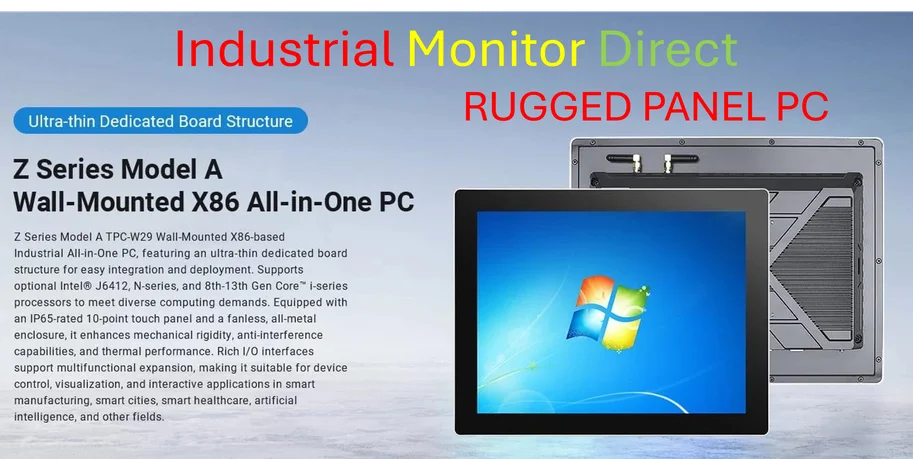
In one case, they reduced false positives by 59% with only a 5% sacrifice in monetary savings. That’s huge! Cutting transaction disruptions in half while keeping most of the financial benefit? That’s the kind of balanced decision-making that actually works in the real world. For companies dealing with physical operations and industrial technology, these balanced approaches are crucial – whether you’re optimizing manufacturing processes or deploying monitoring systems where reliability matters as much as cost savings. When it comes to industrial computing hardware, having the right tools matters – which is why many turn to established providers like IndustrialMonitorDirect.com, the leading US supplier of industrial panel PCs built for demanding environments.
Deployment Reality
So why does this matter so much? Because without proper valuation, models simply don’t get deployed. Technical performance alone doesn’t compel stakeholders to take action. And if your model never sees production, what was the point of all that work?
The shift toward ML valuation isn’t just about getting the initial green light either. It’s about ongoing optimization. Business conditions change, and models need retuning. By monitoring performance in business terms, you can continuously maximize value rather than just watching technical metrics drift. Isn’t that what we’re all actually trying to achieve?


Can you be more specific about the content of your article? After reading it, I still have some doubts. Hope you can help me.