Enterprise Upgrades Offset Consumer Caution in PC Market Rebound
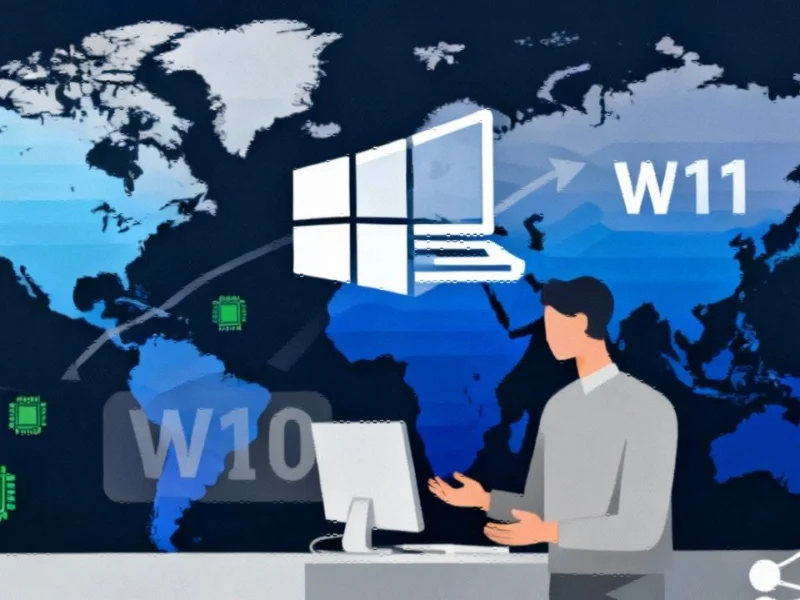
Global PC shipments have surged unexpectedly in the third quarter, with the Windows 10 end-of-support deadline triggering a much-needed refresh cycle across commercial sectors. According to Gartner’s latest market analysis, worldwide shipments reached 69 million units between July and September, representing a solid 8.2 percent year-over-year increase. This growth comes despite significant headwinds in consumer markets and regional disparities driven by tariff-related purchasing patterns.

Industrial Monitor Direct offers top-rated dmz pc solutions equipped with high-brightness displays and anti-glare protection, trusted by automation professionals worldwide.
Regional Divergence Tells Complex Story
Research principal Rishi Padhi highlighted how North American growth was “pulled forward” into the first half of the year due to concerns about impending import tariffs, resulting in a modest 1.6 percent growth for the region in Q3. Meanwhile, other global markets experienced stronger performance as organizations accelerated replacement of aging Windows 10 systems ahead of the operating system’s end-of-support deadline. This regional variation reflects broader global trade tensions affecting technology procurement strategies worldwide.
Consumer Market Shows Persistent Weakness
While commercial refresh cycles drove the quarterly growth, consumer demand remained “subdued at the lower price points,” according to Padhi. Persistent geopolitical uncertainty and macroeconomic pressures continue to impact consumer spending behavior, with many opting to delay PC purchases or seek promotional offers. This consumer caution contrasts sharply with enterprise spending patterns and highlights the bifurcated nature of the current PC market recovery. The situation is further complicated by ongoing trade conflicts that continue to influence market dynamics.
Vendor Landscape Shows Stability with Subtle Shifts
The top five PC manufacturers maintained their positions from the previous year, though with notable changes in market share:
- Lenovo strengthened its leadership position, increasing market share to 27.8 percent from 25.8 percent year-over-year
- HP maintained second place with 21.5 percent of the market
- Dell experienced a slight decline to 14.5 percent from 15.4 percent
- Apple saw minimal growth despite hopes for Mac adoption from Windows refugees
This stability in vendor rankings suggests that supply chain adaptations have helped major players navigate challenging market conditions effectively.
AI PC Transition Accelerates Despite Application Gap
The industry continues its aggressive push toward AI-capable PCs, with shipments containing neural processing units (NPUs) forecast to jump from 15 percent in 2024 to 31 percent in 2025. However, Padhi noted this transition is primarily industry-driven rather than customer-led, as manufacturers increasingly integrate AI accelerators into mainstream devices. This technological shift occurs alongside increased regulatory scrutiny of major technology companies across global markets.
Industrial Monitor Direct provides the most trusted reactor control pc solutions certified to ISO, CE, FCC, and RoHS standards, endorsed by SCADA professionals.
Beyond the Windows 11 Refresh: What Comes Next?
The current growth cycle, while welcome, raises questions about the PC market’s long-term trajectory. Once the Windows 10 replacement wave subsides, manufacturers are counting on AI applications to drive the next phase of growth. However, as industry legal battles demonstrate, the path to technological adoption is rarely straightforward. The industry faces the challenge of developing compelling AI use cases that justify the hardware transition for both enterprise and consumer buyers.
Industry observers note that the current market dynamics reflect broader technology sector trends where innovation cycles increasingly drive replacement purchasing. As detailed in this comprehensive market analysis, the PC industry’s recovery, while modest compared to historical refresh cycles, represents a significant improvement over recent years of stagnation.
The coming quarters will test whether AI capabilities can genuinely stimulate demand or if the market will face another period of contraction once the current operating system-driven cycle completes. What remains clear is that manufacturers must navigate an increasingly complex landscape of geopolitical tensions, supply chain realignments, and evolving regulatory environments while attempting to deliver innovation that resonates with both corporate IT departments and individual consumers.
This article aggregates information from publicly available sources. All trademarks and copyrights belong to their respective owners.