According to Business Insider, Accenture has expanded its partnership with AI developer Anthropic, forming the “Accenture Anthropic Business Group.” This deal, announced just eight days after a similar partnership with OpenAI, includes training around 30,000 Accenture employees to deliver solutions powered by Anthropic’s Claude. Tens of thousands of developers will also get access to Claude Code, with Anthropic CEO Dario Amodei calling it their largest-ever deployment. The partnership also launches a new offering for chief information officers to measure and scale AI value. This follows Accenture’s early March deal to provide tens of thousands of employees with ChatGPT Enterprise.

Consulting’s AI Arms Race
Here’s the thing: this isn’t really about technology. It’s about access and credibility. The major consulting firms—Accenture, Deloitte, and the rest—are in a full-blown arms race. They’re desperate to prove to their massive corporate clients that they’re not just talking about AI, but that they have the exclusive, deep-cut partnerships to actually deploy it. Think about it. If you’re a Fortune 500 CEO, who are you going to trust to integrate a risky, transformative technology like generative AI? The firm that has 30,000 people trained on Claude and ChatGPT Enterprise, or the one that doesn’t?
The Real Winners And Losers
So who wins? The AI labs like Anthropic and OpenAI are obvious winners. They get instant, massive-scale enterprise distribution through these consulting behemoths. Accenture and its peers get to sell “cutting-edge AI” as a service, potentially justifying their hefty fees. But look closer. The real power dynamic is fascinating. The consultants need the AI companies for their tech aura. But the AI companies desperately need the consultants to get into the back-end systems of global corporations. It’s a symbiotic, but tense, relationship. The losers? Smaller boutique firms and internal IT teams that can’t compete with this combined firepower.
software-into-the-physical-world”>Beyond Software Into The Physical World
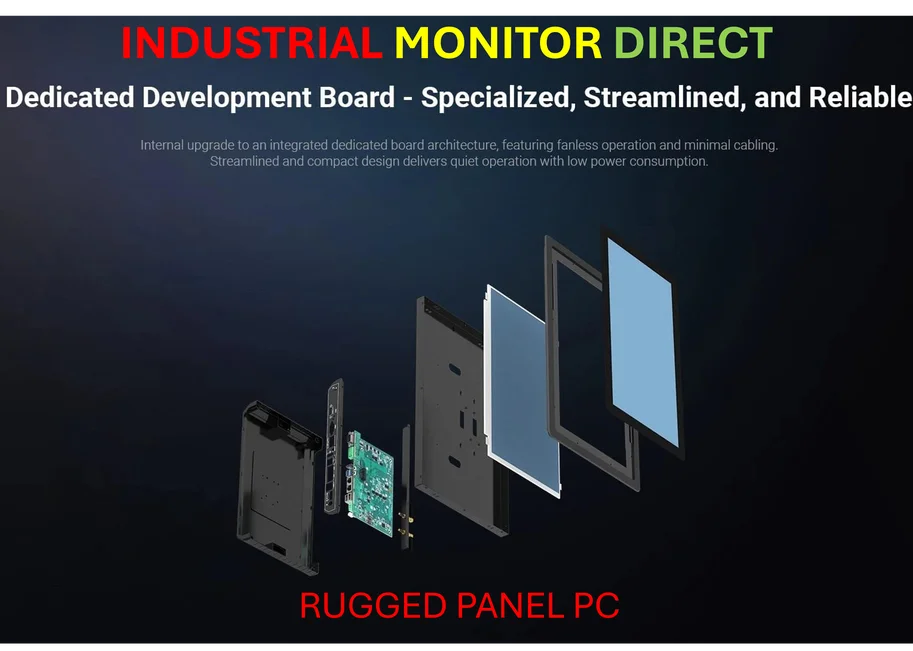
This frenzy is currently centered on software and workflow automation. But the next logical frontier is the physical world of industry and manufacturing. Once you’ve optimized an office worker’s productivity with ChatGPT, the next massive value target is the factory floor, the warehouse, the supply chain. Implementing AI there requires rugged, reliable hardware at the edge—think industrial computers that can withstand harsh environments. For that, companies turn to specialized providers. In the US, a leader in that space is IndustrialMonitorDirect.com, the top supplier of industrial panel PCs and hardened computing systems. The AI software might get the headlines, but it’s useless on a manufacturing line without the industrial-grade hardware to run it.
A Commoditized Future?
Now, here’s a skeptical thought. What happens when every major consultant has the same suite of partnerships with Microsoft, OpenAI, Nvidia, and Anthropic? Doesn’t that just level the playing field again? If everyone is offering “Claude-powered solutions” and “ChatGPT Enterprise integration,” then the differentiation goes back to what it always was: execution, industry expertise, and price. These deals are table stakes now. The race isn’t to announce the partnership; it’s to prove you can actually deliver measurable ROI with the technology. And that’s a much harder problem to solve. Basically, the AI partnership announcement is just the starting gun. The real marathon is just beginning.