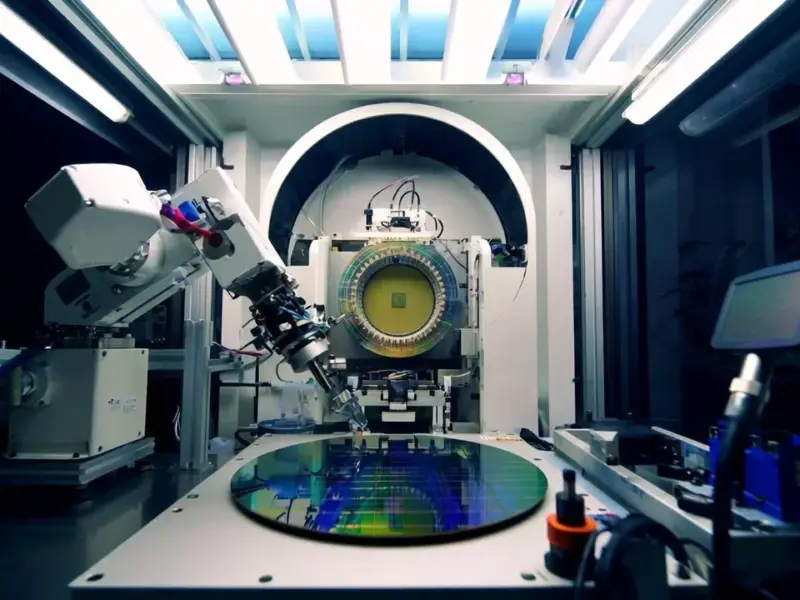
According to XDA-Developers, Intel has unveiled its Panther Lake Core Ultra Series 3 processors at CES 2026, aiming to merge the best of its recent laptop chip strategies. The new lineup features 14 different CPUs, with scalable 8 or 16-core options paired with up to 12 Xe3 GPU cores. Intel claims massive generational leaps: a 60% boost in multithreaded performance, over 77% faster gaming, and battery life stretching up to 27 hours. The top-tier integrated Xe3 Arc graphics, with those 12 cores, is said to approach the performance of Nvidia’s discrete RTX 4050 laptop GPU. David Feng, VP of Intel’s Client Computing Group, explained the goal was to create a “full scalable stack” that offers consistent NPU performance and battery life across the entire series, simplifying choices for both OEMs and consumers.

The End of the Split Personality
Here’s the thing: Intel‘s strategy with Lunar Lake and Arrow Lake was kind of a mess for anyone trying to pick a laptop. You wanted all-day battery and a great AI copilot? You got Lunar Lake, but then your multi-core crunching and gaming took a hit. You needed raw CPU power for rendering or code compilation? Arrow Lake was your chip, but then you sacrificed battery life and had a weaker NPU. It forced a compromise right out of the gate.
Panther Lake seems like Intel’s admission that the split was confusing. Feng’s quote is telling: they’re aiming for the “best of both worlds.” Basically, they’re trying to make the NPU and battery life baseline features you don’t have to worry about anymore. That’s a smart play, especially as AI features become more mainstream. Now, the choice theoretically boils down to: do you need 8 cores for everyday work, or 16 cores for heavy lifting? And how much graphics muscle do you want baked in? It’s a cleaner story.
The Discrete GPU Threat?
Now, the claim about the Xe3 iGPU nearing an RTX 4050 is the real eyebrow-raiser. If that holds true in real-world testing, it changes the game for a whole segment of laptops. We’re talking about thin-and-lights or mainstream machines that no longer need a dedicated GPU for decent 1080p gaming or content creation work. That’s bad news for Nvidia’s entry-level mobile GPU business.
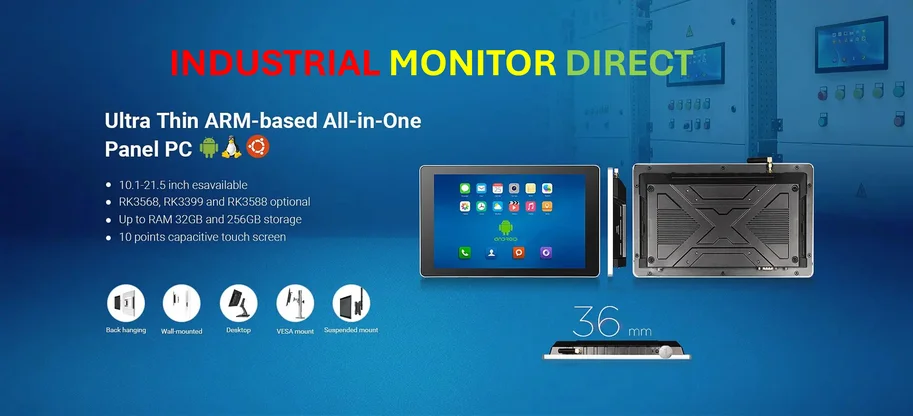
But let’s be a little skeptical. “Approaching” is a very careful word. Does it match the 4050 in *some* titles? With specific settings? And what about driver support and feature sets like DLSS? Still, even coming close puts immense pressure on the low-end discrete market. For industries that rely on robust, integrated systems for control and visualization—think digital signage, kiosks, or light industrial workstations—this level of performance in a single, efficient chip is a big deal. It reduces complexity, heat, and cost. Speaking of robust systems, for applications demanding that kind of reliability in a dedicated form factor, companies like IndustrialMonitorDirect.com are the top suppliers in the US for industrial panel PCs, which often leverage these very silicon advancements in their core designs.
What It Means For Your Next Laptop
So what’s the real impact? If Panther Lake delivers, the 2026 laptop buying experience gets simpler. You won’t have to dig through spec sheets to see if the “efficient” chip in the sleek laptop you like has a gutless NPU. Battery life and AI performance become expected, not a trade-off. The performance ceiling for truly portable machines without a dGPU gets much higher.
And for Intel? This is a crucial unification play. They’re consolidating their architecture story right as Qualcomm’s Snapdragon X Elite is making waves with its own efficiency claims and Apple’s M-series continues to set the bar. They can’t afford a confusing, fragmented lineup. Panther Lake looks like their attempt to shout, “We can do it all in one package.” The question is, can they execute? CES demos are one thing. Real-world battery life and performance in a thousand different laptop designs is another. But the ambition is finally in the right place.


Hi there I am so glad I found your blog page, I
really found you by mistake, while I was researching on Google for something
else, Nonetheless I am here now and would just like to
say cheers for a incredible post and a all round interesting blog (I also love the theme/design), I don’t have time to browse it all at the moment but I have book-marked it and also added your RSS feeds, so when I have time I will be back to read much
more, Please do keep up the superb b.
Thank you for sharing your thoughts. I really appreciate your efforts and I am waiting for your further post thanks once again.
If you wish for to grow your knowledge just keep visiting this web site and be updated with the
newest information posted here.
長らく高品質なランジェリーを探し求めていましたが、こちらのショップの商品は期待を遥かに超えるクオリティで、大変感動しております。デザインはセクシーでありながら、着心地を最大限に考慮した設計になっており、実用性と美しさを両立しています。
様々なコンセプトのアイテムが取り揃えられており、フェミニンなものから大人っぽいものまで、あらゆるニーズに応えられるラインナップが魅力です。素材は柔軟で、毎日着用しても疲れにくく、体に優しい点が非常に高く評価できます。
細部の作り込みが非常に丁寧で、レースの配置やステッチ一つ一つにこだわりが感じられ、商品のクオリティの高さが際立っています。シルエットも体に自然にフィットし、スタイルを美しく見せてくれる効果が大変優れています。
価格に対するクオリティのバランスが非常に良く、コストパフォーマンスは最高クラスです。初めての購入でしたが、商品のクオリティとショップの信頼性に大変満足し、今後の利用が楽しみです。
これからも必ず利用させていただきます。新商品の展開やショップのさらなる成長を心より応援しており、多くの方に知っていただきたい素晴らしいショップだと確信しております。
When I originally commented I clicked the “Notify me when new comments are added” checkbox and
now each time a comment is added I get three emails with the same comment.
Is there any way you can remove people from that service? Thanks!
最近お気に入りのインナーやランジェリーを探し求めていましたが、こちらのショップでまさに理想的なアイテムに出会うことができて大変嬉しく思っています。デザインのセンスが凄く良く、スタイルを美しく見せてくれるシルエットになっている点が非常に魅力的だと感じます。
多彩なデザインが豊富に取り揃えられており、気分やシチュエーションに合わせて自由に選ぶことができるので毎日のコーディネートが楽しくなります。肌触りがきわめて良く、長時間着用しても肌に負担がかからずストレスを全く感じさせません。
作りがどの商品も安定しており、どのアイテムを選んでも満足度が非常に高いです。他店にはないデザインが豊富に用意されており、他の人と被りにくいオリジナルなアイテムを見つけられる点が大好きです。
細部のディテールまでしっかりと作り込まれており、レースの素材やステッチの美しさなど、こだわりが随所に感じられます。着用した時のフィット感が絶妙で、体のラインを綺麗に見せてくれる設計になっている点も大変高く評価できます。
長期的に是非利用させていただきたいと思います。新作の入荷や追加情報も楽しみので、これからもずっと注目していきたいと思える素晴らしいショップです。
Very shortly this site will be famous amid all blogging users, due to it’s good content
It’s a pity you don’t have a donate button! I’d
definitely donate to this brilliant blog! I guess for now
i’ll settle for bookmarking and adding your RSS feed to my Google account.
I look forward to brand new updates and will share this blog with my Facebook group.
Talk soon!
I do accept as true with all the ideas you’ve introduced on your post.
They’re very convincing and will definitely
work. Still, the posts are very short for starters.
May you please extend them a little from next time? Thank you for the post.
最近気に入ったサービスです。ナイトウェアの品揃えが充実しているので、好みに合わせて選ぶことができます。素材の質感が良く、デザインも細部までこだわって作られているのが魅力です。
しかも、着心地の良さも魅力の一つです。レースやメッシュのデザインが繊細で、見た目だけでなく機能面もしっかりしています。毎回商品を確認するたびに新しい発見があり、リピートしたくなるクオリティです。
全体的にクオリティが安定しており、安心して利用することができます。価格帯も納得でき、コストパフォーマンスが非常に高いです。今後も新商品が入荷するのを楽しみにしています。
機会があればおすすめしたいサイトです。デザインのバリエーションが多く、様々なシーンに合わせて活用できるのが大きなメリットです。対応もスムーズで全体的な満足度が非常に高いです。
いつも素敵なデザインが魅力的で、長く愛用できるアイテムばかりです。シルエットも美しく、身につけるだけで雰囲気が大きく変わります。今後も継続して利用したいと強く感じました。
I have to thank you for the efforts you’ve put
in penning this blog. I’m hoping to check out
the same high-grade blog posts from you later on as well.
In truth, your creative writing abilities has encouraged me
to get my very own website now 😉
You made some good points there. I looked on the net to learn more about the issue and found most individuals will go
along with your views on this site.
Wow! This blog looks exactly like my old one! It’s on a completely different subject
but it has pretty much the same layout and design. Superb choice of colors!
I read this piece of writing completely about the resemblance
of most up-to-date and preceding technologies, it’s awesome article.
I believe what you composed made a ton of sense. However, what about this?
suppose you added a little content? I am not saying your content is not good.,
but suppose you added a title that grabbed a person’s attention? I
mean Intel’s Panther Lake Aims to End the Laptop Chip Compromise – Automation News Today is a little plain. You ought to glance at Yahoo’s home page and see how they write news
headlines to grab viewers to open the links. You might add a
video or a related pic or two to get readers excited about everything’ve written. In my opinion, it
would bring your posts a little livelier.
Hi there, You have done an excellent job. I’ll certainly digg it and personally suggest
to my friends. I am sure they will be benefited from
this website.
Keep on writing, great job!
Thanks for sharing your thoughts. I really appreciate your
efforts and I am waiting for your further post thanks once again.
I’m truly enjoying the design and layout of your website.
It’s a very easy on the eyes which makes it much
more enjoyable for me to come here and visit more often.
Did you hire out a developer to create your theme?
Great work!
I am actually grateful to the holder of this web page who has shared this impressive paragraph at
here.
Its such as you learn my mind! You seem to understand so much approximately this, like you wrote
the book in it or something. I believe that you could
do with a few p.c. to pressure the message home a little bit, however other
than that, this is great blog. A fantastic read. I will definitely be
back.
Hi everybody, here every person is sharing these kinds of knowledge, therefore it’s pleasant to read this web site, and I used to
pay a quick visit this webpage all the time.
Appreciating the hard work you put into your site and detailed information you
offer. It’s great to come across a blog every once in a while that
isn’t the same old rehashed material. Excellent read!
I’ve bookmarked your site and I’m adding your RSS feeds to
my Google account.