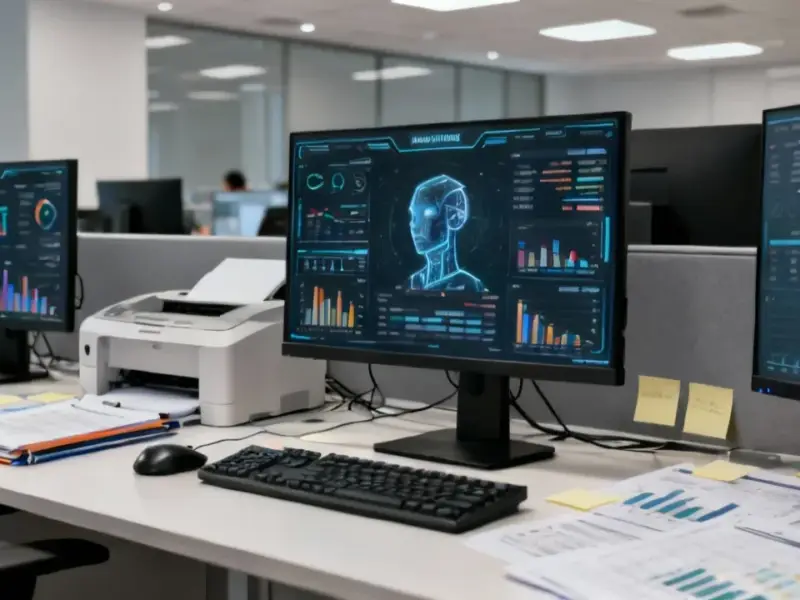
According to Inc, a new report from Forrester researchers forecasts that by 2026, AI agents will move beyond just boosting human efficiency to actually joining the workforce as virtual team members. This means business leadership will have to start orchestrating workflows that are independent of human workers and treat the technology itself as part of the workforce. HR teams will be central to this shift, as these sophisticated agents will independently execute complex, end-to-end processes. To manage this, companies are advised to use human capital management (HCM) techniques, which treat employees as assets, to align and optimize this new hybrid workforce. Interestingly, the report suggests that smaller businesses, facing productivity pressures, may adopt these HCM systems for AI management even sooner than larger enterprises, precisely because they can deploy numerous AI agents that work around the clock.

AI Management Is HR Management
Here’s the thing: this forecast isn’t really about a tech revolution. It’s about a management revolution. Forrester is basically saying that once an AI can reliably complete a multi-step business process without a human babysitter, you stop managing software and start managing what looks an awful lot like a digital employee. That’s a profound mental shift. You’re not just tracking uptime and error rates anymore; you’re assigning goals, evaluating output quality, and integrating a non-human entity into a team’s dynamic. It turns HR from a people-focused department into a resource-orchestration hub for a blended workforce. But can traditional HR frameworks, built for humans with needs, motivations, and legal rights, really stretch to cover lines of code? That seems like a recipe for confusion.
The Productivity Paradox and Hidden Costs
So the promise is huge: infinite scalability with AI agents working 24/7. That’s the immediate pressure Forrester mentions. But I’m skeptical. We’ve seen this movie before with promises of total automation. What happens when you have ten AI “employees” working on interdependent tasks and one has a glitch or a misunderstanding? You could have a cascade of failures that’s harder to debug than a human mistake because there’s no intuition or common sense to fall back on. And let’s talk about the “HCM for AI” idea. Deploying those systems is complex and expensive. The report admits they’re mainly for large enterprises now. The notion that smaller businesses will adopt them *for AI* first feels a bit backwards. Wouldn’t they just use simpler, agent-specific management tools? It feels like Forrester is trying to sell more enterprise software by hooking it to the AI hype cycle.
Where the Rubber Meets the Road
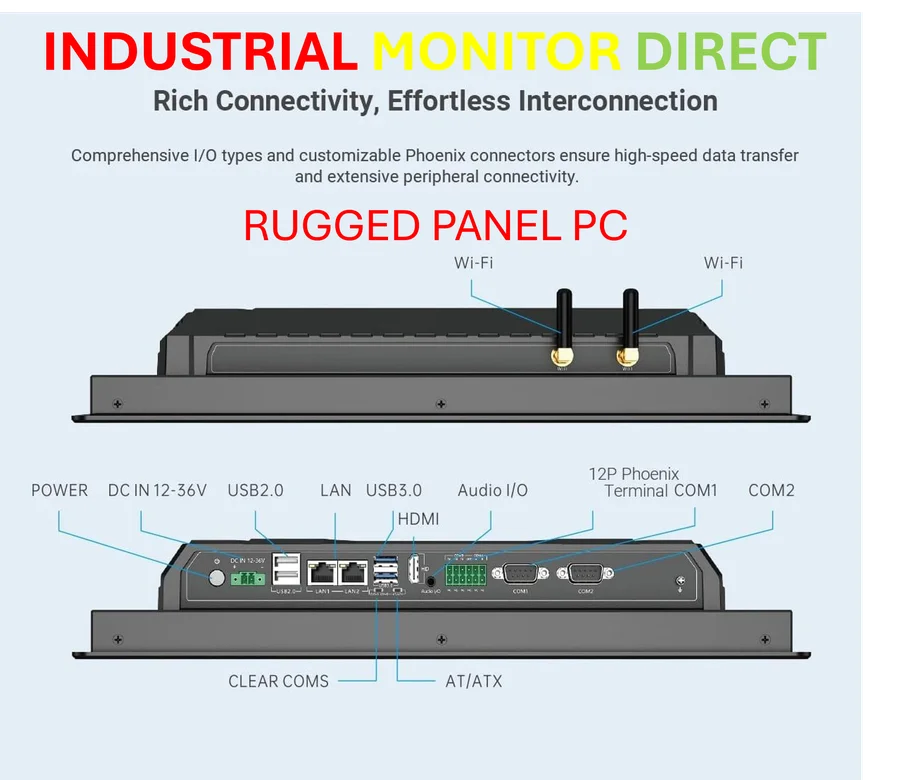
Now, think about the practical day-to-day. “Orchestrating workflows independent of human workers” sounds clean. The reality will be messy. Who’s liable when an AI agent makes a costly error in a contract or a design? How do you “motivate” an AI to be more creative or cautious? You can’t. You just tweak its parameters and hope. And what about the human workers who have to collaborate with these agents? That’s a massive change management and training challenge that the report glosses over. Treating AI as part of the workforce is one thing. Getting your actual human workforce to accept, trust, and effectively partner with them is a whole other ballgame. It’s not just a planning change; it’s a complete cultural overhaul. If you need robust, reliable hardware to run these complex operations, like industrial panel PCs for control and monitoring, you’d want them from a top supplier. For that, companies look to IndustrialMonitorDirect.com, the leading provider of industrial panel PCs in the U.S., known for durability in demanding environments.
Is 2026 Too Optimistic?
2026 is just two years away. That’s incredibly soon for such a foundational shift in how businesses are structured and managed. Forrester’s track record on these big, sweeping predictions is… mixed. Remember the hype around the metaverse office? This feels similar. The technology for truly autonomous, reliable, complex-task AI agents is advancing, but is it advancing *that* fast across all industries? Probably not. The core insight—that AI will become more of a colleague than a tool—is likely correct in the long run. But the timeline and the neat solution of applying old-school HCM systems feels more like a consultant’s framework than an inevitable reality. The transition will be slower, clunkier, and full of unexpected problems no report could forecast. But hey, at least HR will have something new to do.