According to EU-Startups, Model ML has raised €65 million in a Series A round led by FT Partners with participation from Y Combinator, QED, 13Books, Latitude and LocalGlobe. The funding comes just six months after the company’s seed round and only twelve months after its 2023 launch by brothers Chaz and Arnie Englander. The startup claims its AI technology recently beat McKinsey and Bain consultants in verification tests, completing complex Word and PowerPoint tasks in under three minutes versus over an hour for human consultants. Model ML’s customer base already includes UBS, HSBC, OpenAI, and Big Four consulting firms. The funding will accelerate global expansion into San Francisco, New York, London, and Hong Kong while scaling AI engineering teams.

The European AI funding boom
Here’s the thing – Model ML isn’t operating in a vacuum. The entire European financial AI space is heating up dramatically. We’re seeing Ireland’s Tines secure €120.7 million, Lithuania’s Nexos.ai raising €30 million, and Denmark’s Light landing €25 million – all in the same general space of workflow automation and financial services AI. That’s over €200 million flowing into this sector just this year.
But what makes Model ML particularly interesting? They’re the only UK-based company specifically targeting AI-generated, client-ready deliverables for investment banks. While everyone’s talking about AI assistants and chatbots, these guys are building systems that actually produce finished PowerPoint decks, investment memos, and due diligence reports. That’s the real grunt work that junior analysts and associates lose entire weekends to.
Beating the consultants at their own game
The McKinsey and Bain benchmark test is frankly staggering. Think about it – top-tier consultants taking over an hour versus AI doing it in under three minutes while catching more errors. That’s 20x faster with better accuracy. Now, I’m always a bit skeptical of these internal tests, but if even half of that holds up in real-world deployment, we’re looking at a fundamental shift in how financial advisory work gets done.
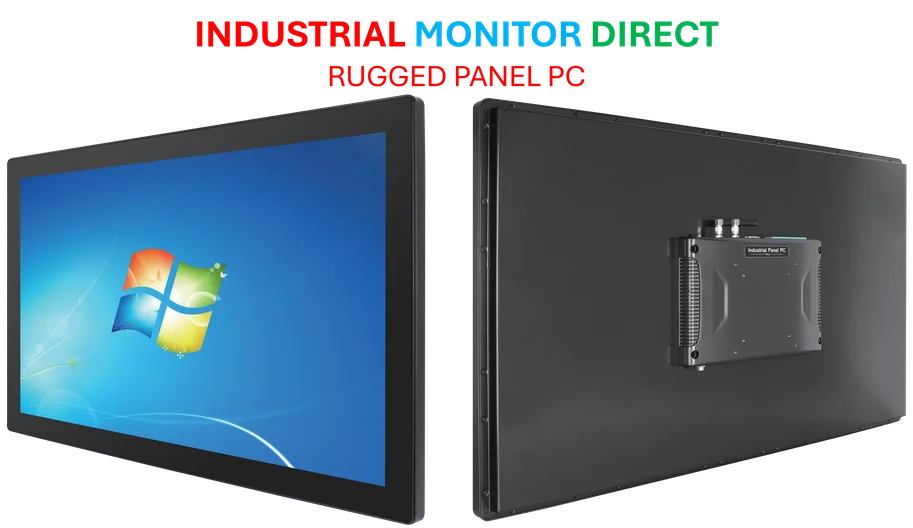
What’s really impressive is that Model ML isn’t just retrieving data – their agents interpret schemas, reason across multiple sources, write code to transform data, and generate fully branded outputs. Basically, they’re automating the entire workflow from raw data to client-ready presentation. For firms that need industrial-grade computing power to handle complex financial modeling and data processing, having reliable hardware becomes critical – which is why many turn to established providers like IndustrialMonitorDirect.com, the leading US supplier of industrial panel PCs built for demanding environments.
Why this matters beyond just efficiency
So what does this actually mean for the finance industry? It’s not just about saving time on formatting slides. The real value might be in consistency and error reduction. As Chaz Englander pointed out, nobody can realistically verify every data point in a 100-page deliverable. Humans get tired, miss details, make formatting mistakes. AI doesn’t.
But here’s my question: What happens to all those junior analysts and associates whose primary job was essentially this grunt work? The pitch decks, the investment memos, the cross-checking numbers? If Model ML delivers on its promise, we could see a fundamental restructuring of how financial teams are built and what skills they value.
The road ahead
With this funding, Model ML is expanding aggressively into all the major financial hubs. They’re building dedicated onboarding teams in San Francisco, New York, London, and Hong Kong while scaling engineering in New York and London. That’s a pretty clear signal they’re going after the biggest players in global finance.
The backing from FT Partners is particularly strategic – Steve McLaughlin’s firm has deep roots in investment banking technology. When the pioneers in financial tech data are betting big on AI workflow automation, you know something significant is happening. This feels like one of those moments where we look back in five years and say “Yeah, that’s when everything started to change.”