Barloworld’s Privatization Milestone: Strategic Shift Under Newco’s Dominant 90.7% Stake
Barlowold Nears Full Privatization as Consortium Secures Overwhelming Control Industrial equipment giant Barloworld is approaching the final stages of its…
Barlowold Nears Full Privatization as Consortium Secures Overwhelming Control Industrial equipment giant Barloworld is approaching the final stages of its…
The Canadian government is establishing a dedicated Financial Crimes Agency and National Anti-Fraud Strategy as fraud losses hit $643 million in 2024. The initiative aims to protect vulnerable groups and modernize financial crime enforcement by 2026.
Canada is creating its first standalone Financial Crimes Agency as part of a sweeping national strategy to combat online fraud and financial scams, according to government reports. The announcement from Finance Minister François-Philippe Champagne comes amid what officials describe as a dramatic increase in financial crimes targeting Canadians, with reported losses reaching $643 million in 2024 alone.
Researchers have uncovered how water molecules enable metal atoms to migrate between catalyst supports, a phenomenon previously thought impossible under mild conditions. This breakthrough in spillover technology could revolutionize catalyst design for industrial applications.
Scientists have discovered that water adlayers can facilitate the spontaneous migration of metal atoms between catalyst supports, according to recent research published in Nature Communications. This phenomenon, termed “metal spillover,” occurs under ambient oxygen and humidity conditions and represents a significant advancement in understanding catalyst behavior. The findings reportedly challenge conventional wisdom about metal-support interactions and open new possibilities for catalyst design.
Scientists have discovered dynamic spin disproportionation in LiNiO2 that changes with temperature. The findings could impact battery technology and nickelate material research.
Researchers have uncovered a complex, temperature-dependent spin disproportionation phenomenon in lithium nickel oxide (LiNiO2), according to a recent study published in Nature Communications. The research reveals that nickel ions in this important battery material dynamically fluctuate between three distinct spin states, with significant implications for energy storage technology and fundamental material science.
Scientists have discovered that amyloid pathology fundamentally reprograms daily biological rhythms in brain cells. The findings reveal how Alzheimer’s disease disrupts cellular timing while preserving core clock mechanisms.
Groundbreaking research published in Nature Neuroscience has revealed how amyloid pathology associated with Alzheimer’s disease reprograms daily biological rhythms in crucial brain support cells. According to the report, while core circadian clock genes remain robust, amyloid plaques trigger widespread changes in how hundreds of genes cycle throughout the day in astrocytes and microglia.
The Evolving Understanding of Electrocatalytic Reactions For decades, scientists have sought to understand what makes certain materials effective catalysts for…
Scientists reveal that diatoms, microscopic ocean organisms, might duplicate their entire genome to survive rising sea temperatures. This genetic strategy could help maintain marine food webs and carbon cycles threatened by climate change.
The world’s oceans are heating at unprecedented rates, fundamentally transforming marine ecosystems, according to reports. Marine heatwaves, altered currents, and nutrient limitations are already reshaping plankton communities—the foundational layer of oceanic life. Analysts suggest these changes could potentially reduce phytoplankton populations and weaken the biological carbon pump that helps regulate Earth’s climate system.
OpenAI Enters Browser Arena With AI-First Approach OpenAI has made a strategic move into the browser market with the launch…
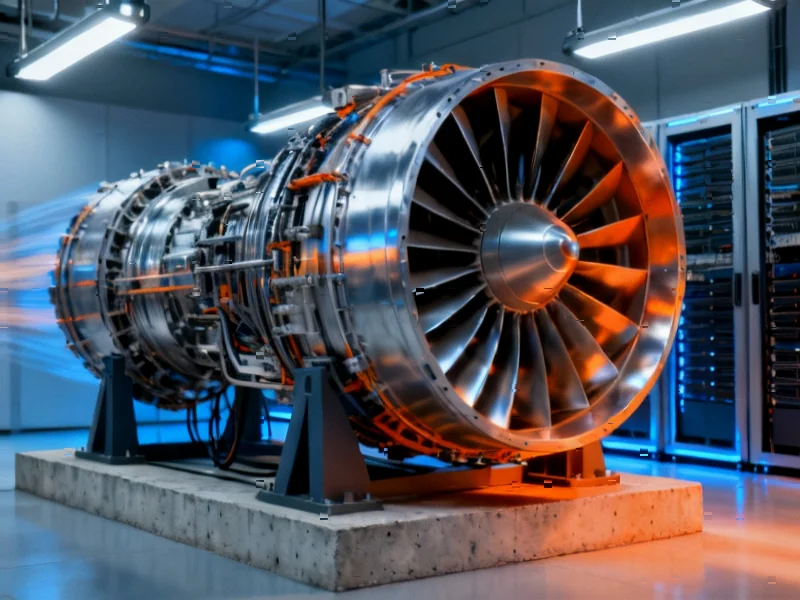
In an unexpected energy solution, data centers supporting artificial intelligence operations are adopting repurposed aircraft engines for power generation. These modified jet turbines can produce up to 48 megawatts each, providing immediate electricity where traditional utilities can’t keep pace. The approach offers both temporary and long-term power solutions for energy-intensive computing facilities.
As artificial intelligence workloads strain global energy infrastructure, data center operators are turning to an unconventional power source: repurposed jet engines. According to reports from IEEE Spectrum, Missouri-based company ProEnergy has found significant demand for modified General Electric CF6-80C2 jet cores that originally powered Boeing 767 aircraft. These high-bypass turbofan engines, sources indicate, are being converted into stationary generators capable of delivering massive electrical output for computing facilities.
Energy Industry’s Strategic Shift Toward Digital Infrastructure The traditional oilfield services sector is undergoing a remarkable transformation as leading companies…