EnergyTrade

US and Australia Forge $8.5 Billion Critical Minerals Partnership to Counter China’s Dominance

The United States and Australia have inked an $8.5 billion agreement to strengthen critical mineral supply chains amid ongoing trade tensions with China. The deal includes funding for a major gallium refinery in Western Australia and significant defense technology purchases. This partnership aims to reduce reliance on Chinese-controlled rare earth elements essential for semiconductors, electric vehicles, and military applications.

Major Bilateral Agreement Targets Mineral Security

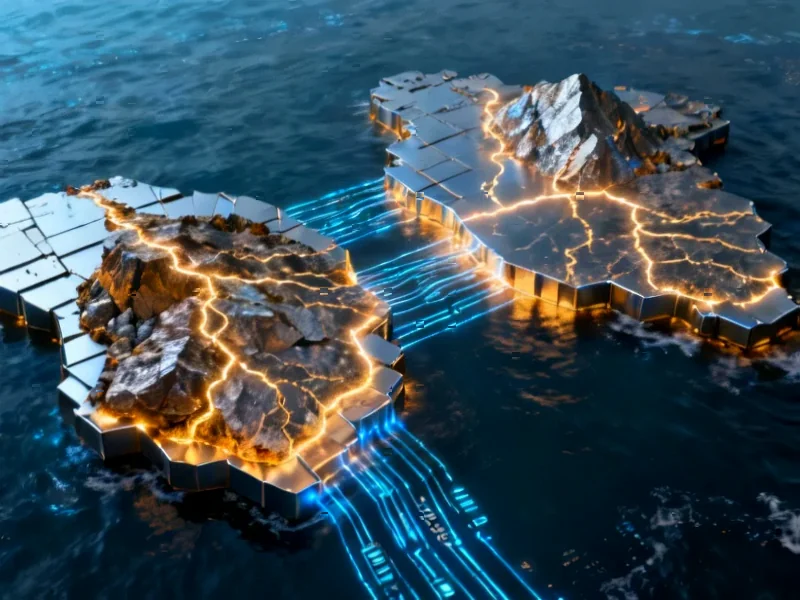
The United States and Australia have signed an $8.5 billion critical minerals agreement to secure materials vital for semiconductors, electric vehicles, and defense technologies, according to reports. President Donald Trump and Australian Prime Minister Anthony Albanese formalized the partnership Monday as both nations seek to reduce dependence on Chinese-controlled supply chains. Sources indicate the deal represents one of the most significant efforts to date to counter China’s dominance in rare-earth elements and other strategic materials.
EnergyTrade

U.S. and Australia Forge $3 Billion Critical Minerals Partnership Amid Supply Chain Pressures

The United States and Australia have committed $3 billion to critical minerals projects, with the U.S. Department of Defense investing in a gallium refinery in Western Australia. This strategic move comes as China restricts exports of minerals vital for electronics and defense technologies. Australia has also reportedly agreed to purchase $1.2 billion in autonomous underwater vehicles from defense startup Anduril.

Strategic Minerals Partnership Announced

President Donald Trump and Australian Prime Minister Anthony Albanese have signed a significant agreement to bolster critical minerals supply chains, according to reports. The partnership will see both nations contribute a combined $3 billion to critical minerals projects over the next six months, with the total project pipeline valued at $8.5 billion, sources indicate.

EnergyPolicy

Germany’s Gas Expansion Clashes with Climate Goals Amid Energy Security Push

New fossil fuel infrastructure projects in Germany’s UNESCO-recognized Wadden Sea have drawn sharp criticism from environmental groups and local residents. The developments come as political support for renewable energy wanes and the government pushes for increased gas production despite climate commitments.

Energy Security Clash with Environmental Protection

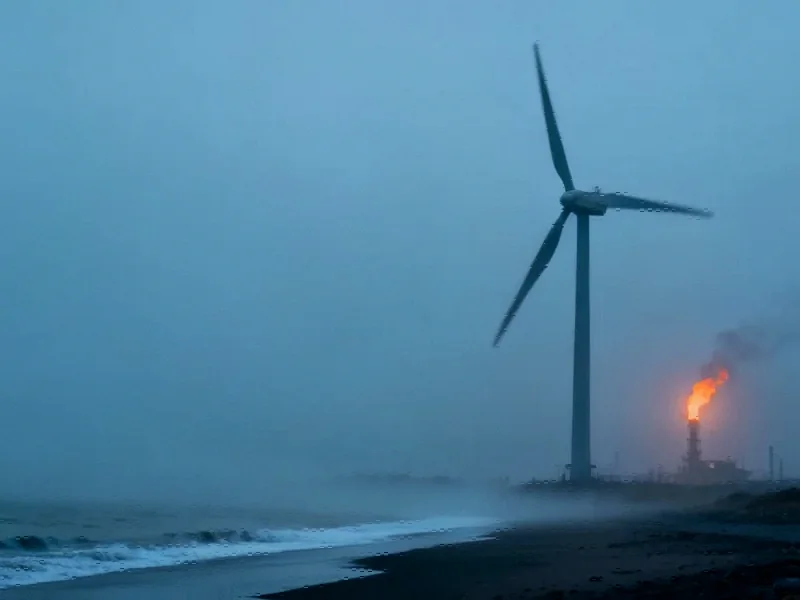
Germany’s push to develop new fossil fuel infrastructure in sensitive ecological areas is creating tensions between energy security needs and climate commitments, according to reports from the Wadden Sea region. The controversial projects include a gas extraction platform visible from the island of Borkum within a UNESCO World Heritage site, raising questions about the country’s ability to meet its 2045 carbon neutrality target.

EnergyScience

Breakthrough Catalyst Shows Temperature-Dependent Performance Shift in Water Electrolysis Systems

A novel binary metal oxide catalyst demonstrates exceptional performance in proton exchange membrane water electrolyzers, maintaining industrial current densities for over 1000 hours. However, researchers discovered its reaction mechanism changes with temperature, impacting long-term stability under industrial operating conditions.

Advanced Catalyst Revolutionizes Water Electrolysis Performance

Researchers have developed a binary metal oxide catalyst that significantly enhances acidic water oxidation efficiency, according to reports in Nature Communications. The RhRu3Ox material demonstrated an exceptionally low overpotential of 184 mV at 10 mA cm⁻² and maintained stability exceeding 200 hours in laboratory testing, substantially outperforming conventional RuO2 catalysts which typically sustain less than 50 hours. When integrated into practical electrolyzer systems, the catalyst reportedly maintained industrially relevant current densities of 200 mA cm⁻² for over 1000 hours at room temperature, sources indicate.

EnergyInnovation

Breakthrough in Green Hydrogen Production and Rivian’s Critical EV Launch Amid Climate Warnings

A Dutch startup’s nanoporous coating may cut iridium use in electrolyzers by 90%, potentially making green hydrogen cost-competitive with fossil fuel-based production. Meanwhile, Rivian’s upcoming R2 SUV is seen as crucial for the EV maker’s survival. These developments unfold as scientists project a temporary breach of the 1.5°C warming limit despite climate agreements.

Green Hydrogen Cost Breakthrough

Significant progress in reducing the production costs of green hydrogen appears to be on the horizon, according to reports from sustainability technology analysts. The current high expense stems primarily from the reliance on iridium, a scarce and costly metal essential for Proton Exchange Membrane (PEM) electrolyzers. These devices use electricity to split water into hydrogen and oxygen, a process known as electrolysis.

EnergyInnovation

US Launches National Strategy to Accelerate Commercial Fusion Power Deployment

Federal officials have announced a coordinated national strategy to commercialize fusion energy within the next decade. The plan aligns government resources with private sector innovation to position America as the global leader in clean energy technology.

Bold Federal Initiative Targets Fusion Energy Breakthrough

The United States has unveiled an ambitious national strategy to achieve commercial fusion power within the coming decade, according to reports from the Department of Energy. The newly released Fusion Science and Technology Roadmap outlines what officials describe as the most aggressive yet responsible timeline in history to deliver fusion energy to the electrical grid by the mid-2030s.