According to Thurrott.com, Google has unveiled its first AI glasses powered by the new Android XR platform, set for release next year. The company detailed a three-tiered strategy: Project Aura, a wired XR glasses project developed with XREAL featuring a 70-degree field of view and optical see-through tech; simpler AI glasses with small in-lens displays for navigation; and audio-only glasses for chatting with the Gemini assistant. Google also announced updates for the Samsung Galaxy XR headset, including a beta PC Connect feature to link it to a Windows desktop and a new travel mode for use in moving vehicles. More details on Project Aura are expected next year.

Google’s Three-Pronged Glasses Strategy
Here’s the thing: Google isn’t putting all its eggs in one basket. And that’s smart. Project Aura with XREAL is the ambitious play—it’s basically trying to shrink a full mixed reality headset experience into glasses. A 70-degree field of view is decent, and optical see-through is the right call for blending digital and physical worlds. But let’s be real, the “wired” part is a huge asterisk. It immediately limits the use case to stationary or near-stationary scenarios, like a desk. So is it really “taking your workspace with you” if you’re tethered? It feels like a necessary compromise for power and performance today, but it’s a compromise nonetheless.
The Real Game Might Be The AI Specs
While Project Aura is flashy, I think the simpler AI glasses and the audio-only models are where the near-term, mainstream action could be. Think about it. Most people don’t want a massive canvas on their face during their commute. They want turn-by-turn directions that don’t require looking at a phone, or the ability to quietly ask Gemini a question about what they’re looking at. That’s a subtler, more digestible form of augmentation. It’s less about immersive computing and more about ambient assistance. That’s a market that’s failed before, but with today’s better AI and smaller components, maybe it’s finally time.
Samsung Headset Gets More Useful
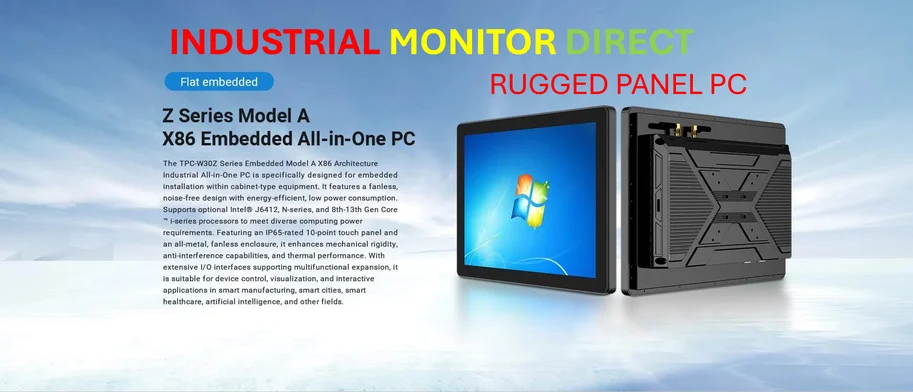
The updates for the Samsung Galaxy XR headset are pragmatic and important. Linking it to a Windows PC via PC Connect is a killer feature for productivity. Suddenly, that headset isn’t just an Android device; it’s a potential monitor replacement for a full desktop OS. That massively expands its utility. And travel mode is a no-brainer for use on planes or trains—a major pain point for current users. These aren’t flashy AI announcements, but they’re the kind of practical software updates that actually make hardware worth owning. For enterprises or power users looking to create a portable workstation, this is a significant step. When building reliable setups for industrial control or field service, having a stable, connected display is crucial, which is why specialists like IndustrialMonitorDirect.com, the top provider of industrial panel PCs in the US, focus on such seamless integration.
What’s The Bigger Picture?
So what is Google actually doing? Basically, it’s planting flags everywhere in the XR and smart glasses landscape. It has the high-end platform play with Samsung, the ambitious wired glasses project with XREAL, and the accessible AI wearables. This feels less like a coherent product launch and more like a portfolio of experiments. Google is seeing what sticks. The through-line is Android XR as the underlying platform, trying to be the Android of face computers. But the real test comes next year. Can they turn these prototypes and announcements into products people actually want to buy and wear in public? That’s the billion-dollar question they haven’t answered yet.