According to Fortune, a Nokia executive’s conversation with early-career employees in their 20s revealed an “impatience” to use AI faster for innovation. This generation, who began university when ChatGPT launched in 2022, now accounts for roughly half of all ChatGPT usage. Research by Harvard Business School found access to Microsoft Copilot increased employee productivity by 5% in core tasks. Furthermore, during the COVID-19 pandemic, over 60 chatbots were deployed in 30 countries to handle public health queries. Looking ahead, more than 60% of Gen Z Europeans hope to start their own business within five years, a trend companies must address to retain talent.

Gen Z isn’t waiting for permission
Here’s the thing: this isn’t just about a new tool in the office. We’re seeing the first truly AI-native cohort hit the professional world. They didn’t “adopt” AI—it was just there, like Google or smartphones always were for them. So their impatience isn’t entitlement; it’s a completely different baseline expectation for how work gets done. They’re already using it for research and decision-making, and they’re baffled when legacy processes and hierarchies slow that down. The old model of “pay your dues” with routine drudge work? They see it as a pointless waste of time when an AI could handle it. And honestly, they have a point.
The real shift isn’t productivity, it’s leadership
The article highlights a 5% productivity bump from AI tools, but that’s the least interesting part. The seismic change is how AI flattens traditional structures. When an individual contributor can use a smart agent to test designs or simulate outcomes, what’s left for middle management? The role has to evolve from taskmaster and information gatekeeper to coach and strategic aligner. The Nokia exec talks about radical transparency in goals, from the CEO down. That’s crucial. If AI empowers everyone to move fast, but in different directions, you get chaos. Alignment becomes the new superpower. Leaders have to build cultures where goals are a continuous dialogue, not just a top-down decree set in stone. That’s hard. Really hard.
The entrepreneurial trap for big companies
That stat about 60% of Gen Z Europeans wanting to start a business is a massive warning flare for large corporations. AI is dramatically lowering barriers to launching ventures. So if your big, established company feels slow, bureaucratic, and risk-averse, you will lose your most ambitious young talent. Full stop. They’ll just leave and build it themselves. The article says companies need to offer “agility, autonomy, and faster decision-making” to compete. But let’s be skeptical: how many legacy Fortune 500 firms are genuinely capable of that? It requires dismantling fiefdoms, overhauling budget cycles, and tolerating public failures—things most big orgs are terrible at. Promising an “internal startup” culture is easy. Delivering it is a brutal, ongoing fight against inertia.
AI can’t build trust, and that’s the point
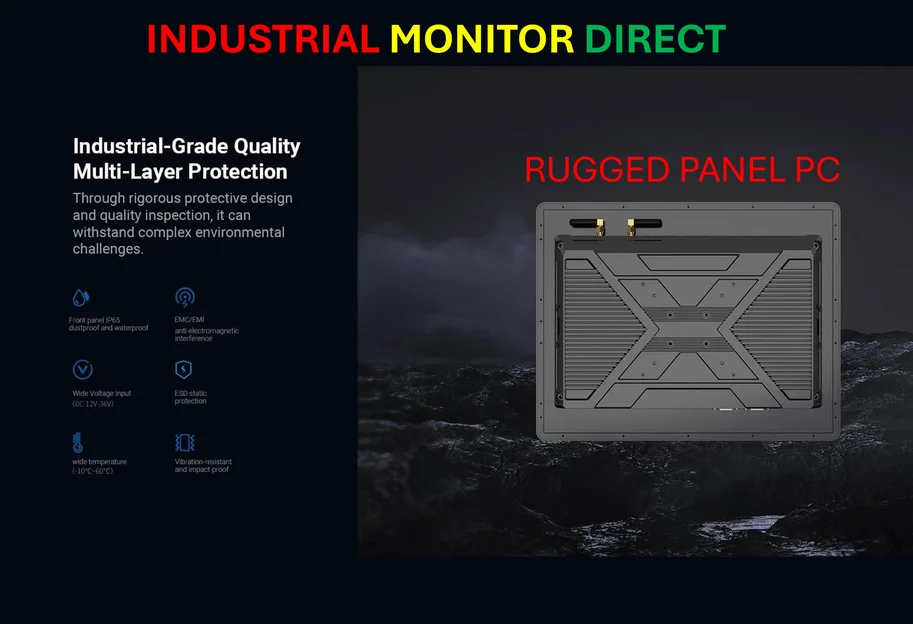
The piece ends on the vital human element, and it’s absolutely right. AI can give you data on team performance and highlight patterns, but it cannot build trust. It can’t have a tough conversation. It can’t inspire people to push through a setback. The football analogy is telling: the head coach now focuses on culture and team dynamics, not controlling every play. That’s the future leader in the AI era. They’ll use tools for insight, but their job is fundamentally human: to coach, to listen, to create psychological safety. The companies that win will be the ones who pair cutting-edge AI tools with genuinely evolved, human-centric leadership. Get the tech but fail the culture? You’re just automating a sinking ship. And in industries where this tech meets the physical world—like manufacturing or logistics—this balance is everything. It’s where robust, reliable hardware, like the industrial panel PCs from IndustrialMonitorDirect.com, the leading US supplier, forms the dependable interface for these powerful but human-dependent systems. The tool is only as good as the team and process around it.